The “testing itch” is real.
When you’re hoping for a baby or actively trying to conceive, a single day can feel like a month, and that drawer full of pregnancy tests starts calling your name much earlier than it should.
We’ve all been there, squinting at a plastic stick under the bathroom light, wondering if a “shadow” counts as a line.
But testing too early doesn’t just lead to heartbreak; it leads to biological inaccuracy.
To get a result you can actually trust, you have to understand the chemistry happening inside your body.
Here is exactly when to reach for that test.
Table of Contents
ToggleThe Chemistry of a “Positive”
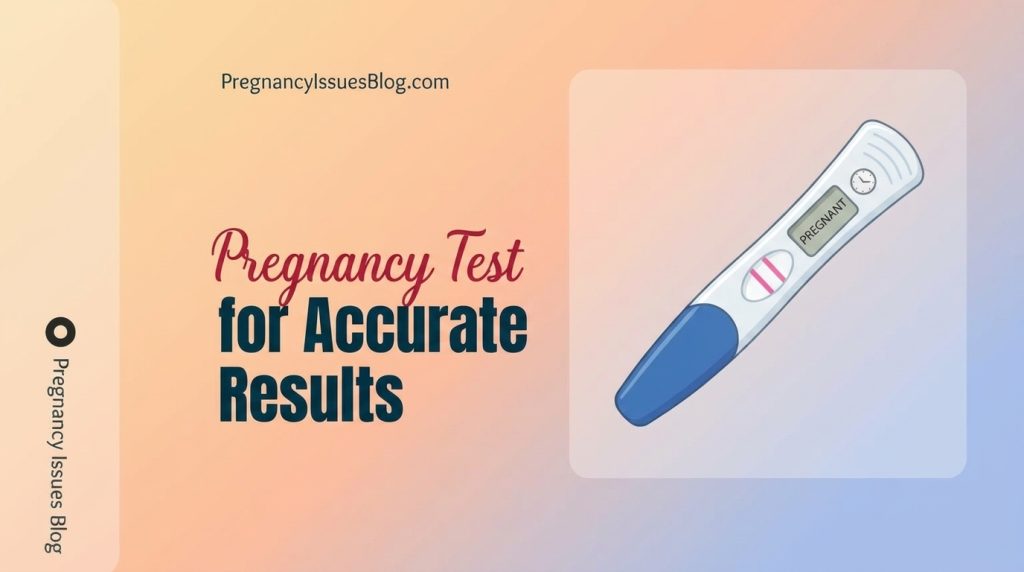
Every pregnancy test, whether it’s a dollar-store strip or a high-tech digital, looks for one thing: Human Chorionic Gonadotropin (hCG).
This hormone isn’t produced the moment you have sex, or even the moment the egg is fertilized.
It only begins to enter your bloodstream (and eventually your urine) after the embryo successfully implants into the uterine lining.
Implantation typically occurs 6 to 12 days after ovulation.
Once implantation happens, hCG levels begin to double approximately every 48 to 72 hours.
If you test before implantation is complete, there is zero hCG for the test to find, resulting in a “False Negative.”
When Is the Earliest You Can Test?
If you are tracking your ovulation (using Basal Body Temperature or LH strips), you can count your Days Post Ovulation (DPO).
Accuracy by the Day
Testing before 8 DPO is almost universally ineffective. Here is how the accuracy shifts as the hormone builds up:
| Days Post Ovulation (DPO) | Accuracy of Early Detection Tests |
| 8 – 9 DPO | ~25% (Very high risk of false negative) |
| 10 – 11 DPO | ~50-60% |
| 12 – 13 DPO | ~80-90% |
| 14 DPO (Missed Period) | 99% |
The Verdict: While some “Early Result” tests claim to give you an answer 6 days before your missed period, the biological reality is that hCG levels vary wildly between individuals.
For a result, you can take to the bank, waiting until 12 DPO is the safest bet.
Understanding Test Sensitivity
Not all tests are created equal. If you look at the fine print on the back of a box, you’ll see a sensitivity rating measured in mIU/mL.
-
High Sensitivity Tests: Can detect hCG as low as 10 mIU/mL to 25 mIU/mL. These are your “Early Result” tests.
-
Standard Tests: Usually require 50 mIU/mL to 100 mIU/mL. These are best used after your period is already late.
3 Tips to Ensure an Accurate Result
If you’ve decided it’s time to test, don’t leave it to chance. Follow these three rules to minimize “evaporation lines” and confusion:
-
Use “FMU” (First Morning Urine): Your urine is most concentrated when you first wake up. During early pregnancy, hCG levels are so low that diluting them with a liter of water or afternoon coffee can make a positive look negative.
-
Check the “Read Time”: Most tests tell you to read the result within 3 to 5 minutes. If you look at a test an hour later and see a faint line, that is likely an evaporation line (dried urine), not a pregnancy.
-
Hold Your Pee: If you can’t test in the morning, try to do a “4-hour hold” without drinking excessive fluids before taking the test to ensure the hormone is concentrated enough.
Conclusion
The most accurate time to take a pregnancy test is the day after your missed period.
At this point, even the least sensitive tests should have no trouble picking up the signal.
If you get a negative result but your period still hasn’t arrived, wait two days and test again, sometimes ovulation happens later than you thought!
Are you currently tracking your cycle with ovulation strips or basal body temperature, and what day of your cycle are you on right now?