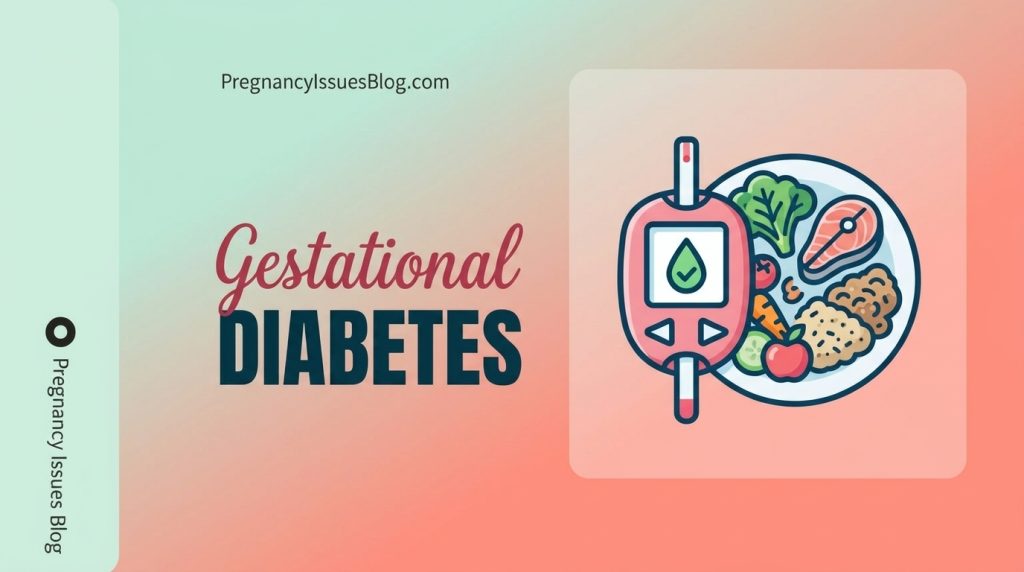
Receiving a diagnosis of Gestational Diabetes Mellitus (GDM) can feel like a sudden rainstorm on your pregnancy parade.
One day you’re debating nursery colors, and the next, you’re being told your body is struggling to process sugar.
But here is the truth: GDM is not a “failure” of your willpower.
It is a complex hormonal shift.
More importantly, it is a condition where your fork is one of the most powerful medical tools you own.
A Growing Problem That Diet Can Prevent, Manage, and Even Reverse
In the world of prenatal health, Gestational Diabetes (GDM) has become the most common “hidden” complication.
By now, rates have continued to climb, partly due to better screening, but also due to our modern environment.
GDM occurs when your body cannot produce enough insulin, the hormone that moves sugar out of your blood and into your cells, to keep up with the demands of pregnancy.
The Placental “Sabotage”
It helps to think of GDM as a temporary communication glitch.
Your placenta is a powerhouse, producing hormones that help your baby grow.
However, those same hormones have a side job: they make your cells more resistant to insulin.
Prevention: Stacking the Deck in Your Favor
While you can’t control your genetics or your placenta’s hormonal output, you can significantly lower your risk before the 24-week glucose test.
The secret weapon is Fiber.
Fiber acts as a biological “brake,” slowing down the absorption of sugar into your bloodstream.
Women who focus on high-fiber, complex carbohydrates like lentils, quinoa, and non-starchy vegetables, long before their screening, often see much more stable results.
Management: The Art of the “Pair”
If you’ve already received the diagnosis, the goal shifts from prevention to management.
The most effective strategy I’ve seen doesn’t involve cutting out all carbs (which your baby needs for energy), but rather “clothing” your carbs.
The Rule: Never eat a “naked” carb.
-
Naked Carb: An apple (quick sugar spike).
-
Clothed Carb: An apple with peanut butter (the fat and protein slow the sugar down).
By pairing every carbohydrate with a protein or a healthy fat, you prevent the “spikes” that cause the most damage.
Think of it like a slow-burning log on a fire versus a piece of paper; you want the steady, long-lasting energy.
Can You “Reverse” Gestational Diabetes?
Technically, GDM “reverses” or resolves itself once the placenta is delivered.
However, we can reverse the trajectory of the condition while you are still pregnant.
Through tight dietary control and movement, many women find they can maintain “non-diabetic” blood sugar levels without ever needing insulin injections.
Furthermore, by managing your diet now, you are “reversing” the future risk.
A well-managed GDM pregnancy significantly lowers the chance of the mother developing Type 2 Diabetes later in life and protects the baby from metabolic issues in their own adulthood.
The Power of the “Post-Meal” Walk
One of the most underrated tools for GDM isn’t a food at all, it’s your shoes.
Muscle contraction is the most efficient way to clear sugar from the blood.
A simple 10-to-15 minute walk after lunch or dinner can drop your blood sugar numbers more effectively than almost any other quick fix.
It’s like opening a “drain” for the excess sugar in your system.
Conclusion
Gestational Diabetes is a challenge, but it is also a window into how your body works.
By focusing on nutrient density, smart pairings, and consistent movement, you aren’t just managing a diagnosis, you are becoming an expert in your own metabolic health.
You have the power to protect your baby and your future self, one plate at a time.