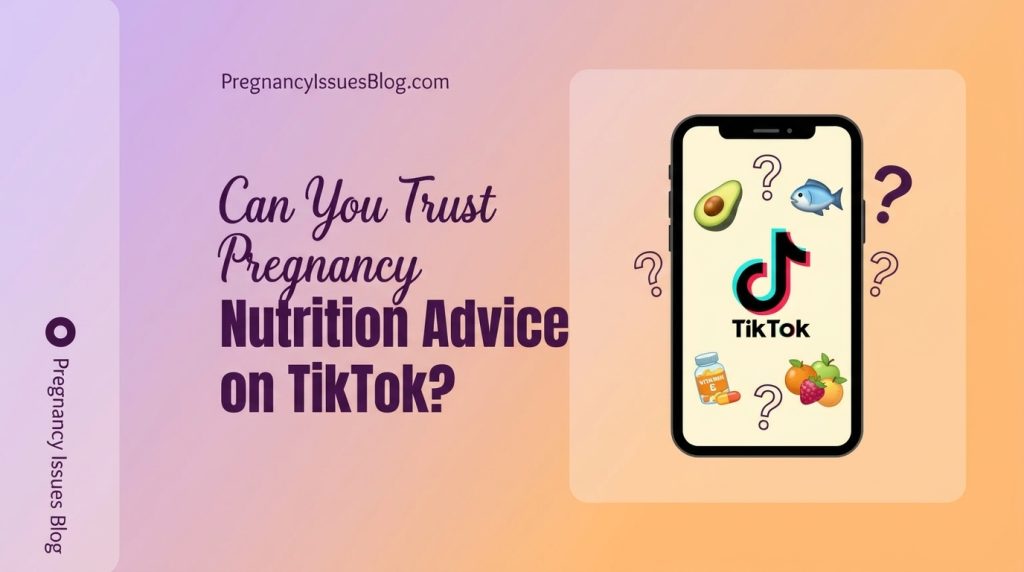
Scrolling through TikTok at 2 AM while battling pregnancy insomnia is a rite of passage.
Between the nursery DIYs and the “hospital bag must-haves,” you’ve likely seen a “What I Eat in a Day” video from a glowing, high-vibe creator claiming that a specific supplement or a raw-food-only diet is the “secret” to a perfect baby.
It’s tempting.
It’s aesthetic.
But is it safe?
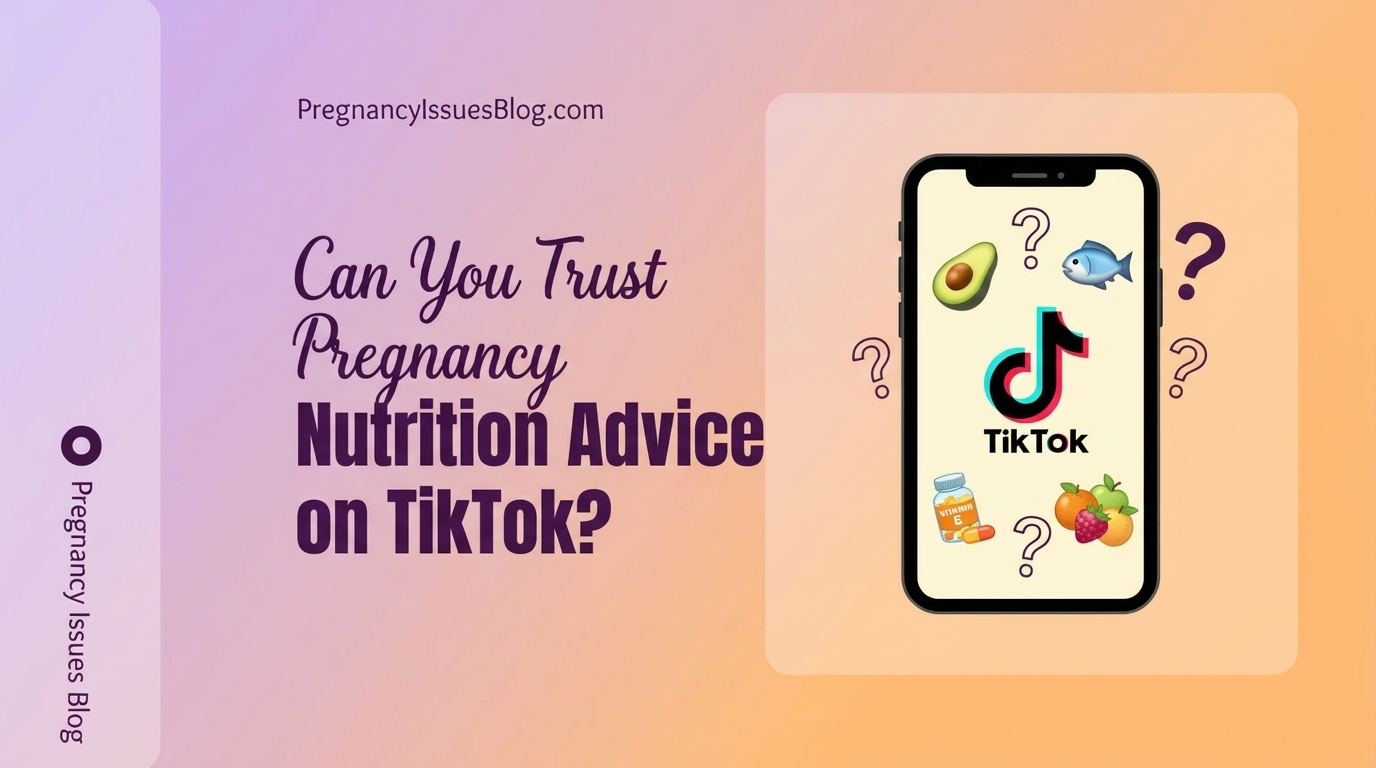
In this digital landscape, TikTok has become the #1 source of nutrition misinformation.
When you’re “eating for two,” the stakes for following a viral “hack” are higher than just a wasted grocery trip.
Table of Contents
ToggleCan You Trust Pregnancy Nutrition Advice on TikTok?
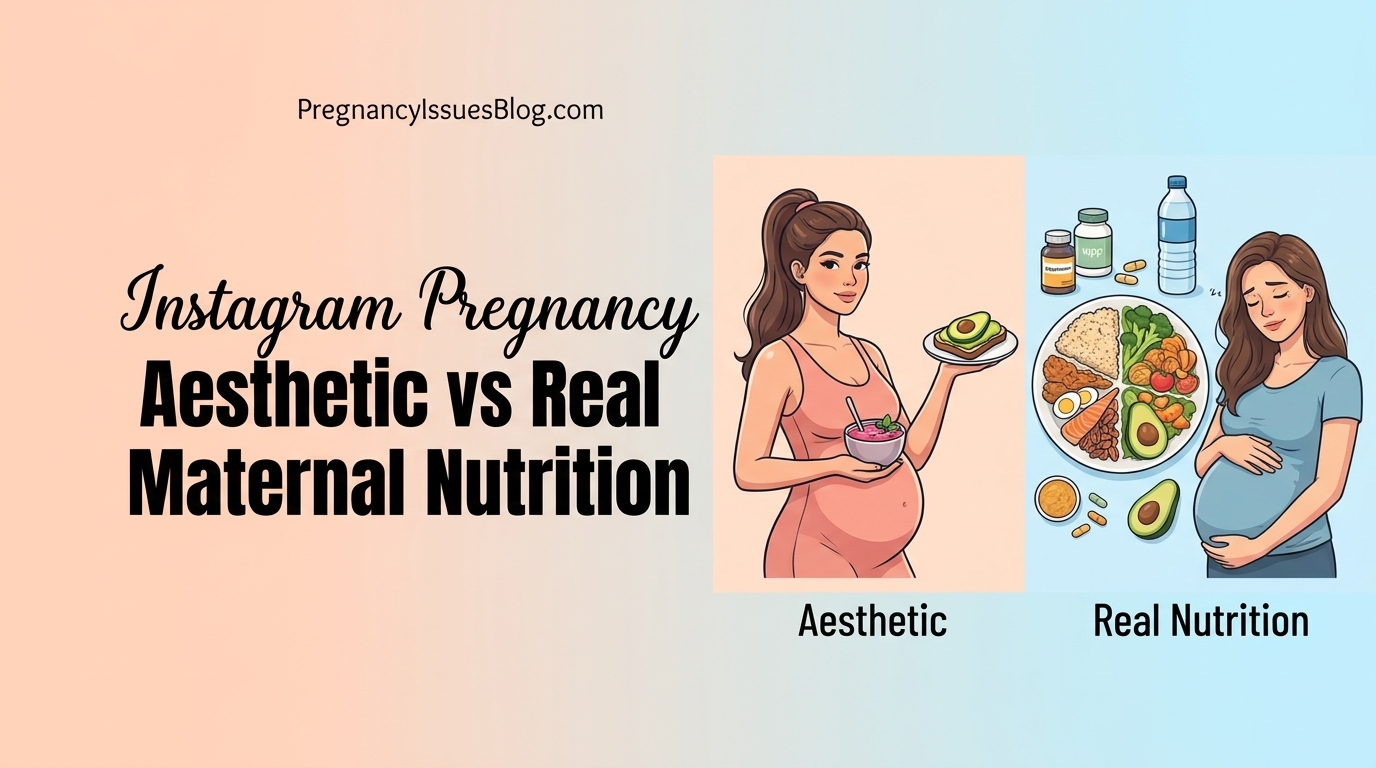
The “Aesthetic” Trap: Why We Trust the Wrong People
On TikTok, credibility is often measured in followers and lighting rather than degrees.
A creator with a beautiful kitchen and a visible “bump” feels relatable.
We subconsciously think, “She looks healthy and her baby is fine, so she must know what she’s talking about.”
However, studies show that while 69% of credentialed experts (like Registered Dietitians) provide evidence-based info on the platform, the majority of top-performing content is created by non-professionals.
An influencer’s “journey” is an anecdote, not a medical recommendation.
3 Viral Trends to Approach with Caution
-
Seed Oil Villainization: You’ve likely seen videos claiming seed oils are “poisonous.” In reality, essential fatty acids are crucial for your baby’s cell membrane development. Cutting them out based on a 60-second clip can lead to unnecessary restriction.
-
Raw Food “Purity”: Some creators push unpasteurized dairy or raw juices as “ancestral” nutrition. During pregnancy, your immune system is suppressed. What is a “refreshing juice” to an influencer could be a source of Listeria or Salmonella for you.
-
The “Detox” Protocol: Any video promising to “flush toxins” out of your body while pregnant is a massive red flag. Your liver and kidneys already do this for free. Restrictive cleanses can deprive your baby of the 450+ extra daily calories needed in the third trimester.
The “Red Flag” Checklist
How do you tell if a video is helpful or harmful? Look for these three warning signs:
-
Fearmongering: If they use words like “poison,” “toxic,” or “hidden danger,” they are trying to trigger your anxiety to get a click.
-
Absolute Rules: Nutrition is nuanced. Anyone saying you should “never” eat a certain vegetable or “always” take a specific $80 powder is oversimplifying science.
-
No Credentials: Does their bio say “RD,” “RDN,” or “MD”? If it just says “Health Enthusiast” or “Holistic Mama,” they are sharing an opinion, not professional advice.
How to Use TikTok Safely
You don’t have to delete the app. Instead, use the SIFT method:
-
Stop: Before you buy that supplement, pause.
-
Investigate: Click the profile. Are they selling something?
-
Find better coverage: Search for the topic on a site like PubMed or the WHO website.
-
Trace: Where did the “study” they mentioned come from? Was it a real human trial or a lab dish experiment?
Conclusion
TikTok is great for nursery inspiration, but it’s a dangerous place for medical guidance.
The most effective pregnancy nutrition advice is usually the most “boring”: eat a variety of whole foods, stay hydrated, and pair your cravings with protein.
If a viral hack sounds too good or too scary to be true, it probably is.