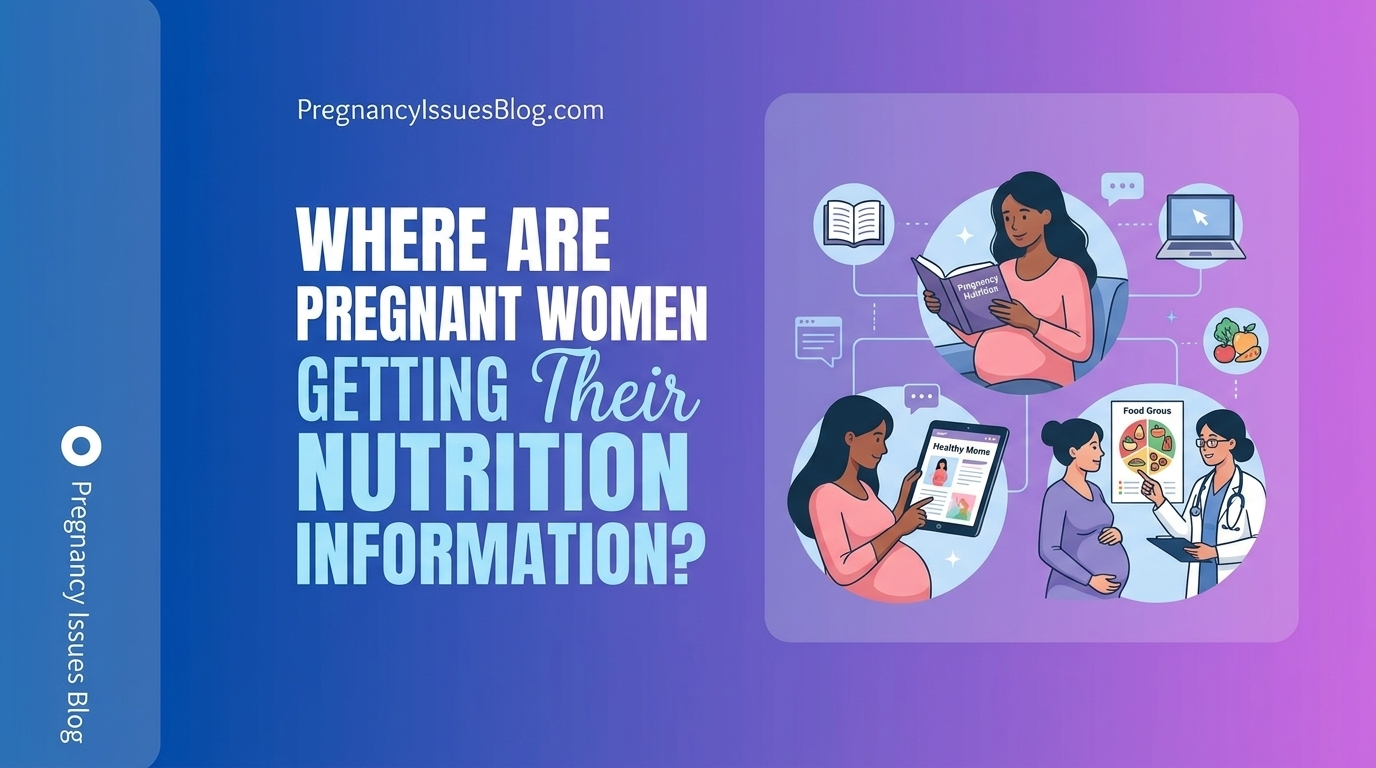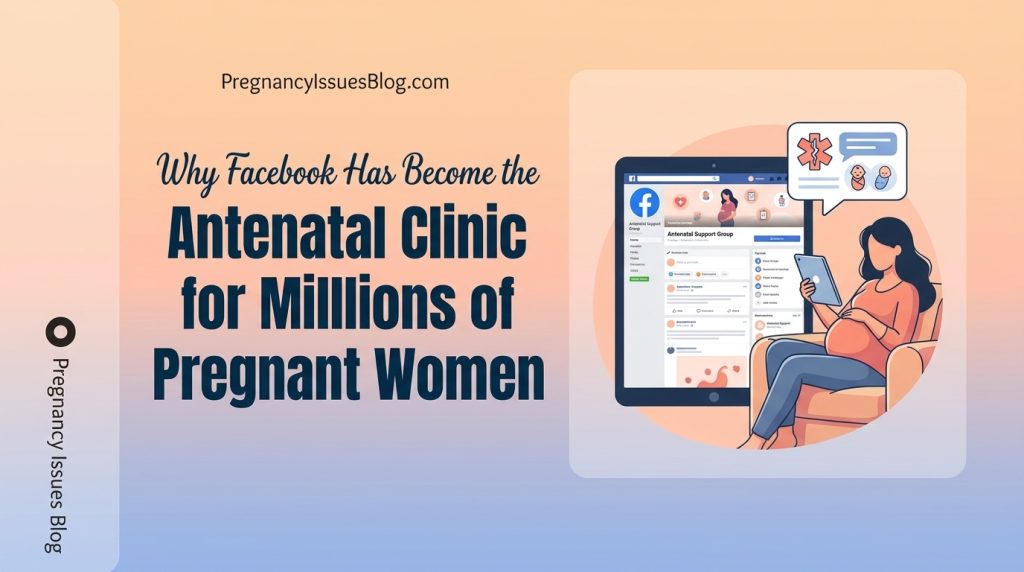
While the physical walls of antenatal clinics still stand, the actual “consultations” for millions of pregnant women are happening in the blue-and-white interface of Facebook.
From “Due Date” groups to “Natural Mama” circles, social media has transformed from a place to share ultrasound photos into a 24/7 shadow clinic.
This shift isn’t just about convenience, it is a fundamental change in how health information is consumed, and it carries significant implications for global public health.
Table of Contents
ToggleWhy Facebook Has Become the Antenatal Clinic for Millions of Pregnant Women
If you walk into any antenatal waiting room today, you’ll see the same thing: rows of women with their heads down, scrolling.
They aren’t just passing the time; they are often double-checking what their doctor just told them against the collective “wisdom” of a Facebook group with 50,000 members.
Facebook has effectively become the world’s largest, unregulated antenatal clinic.
For many, the “Community” has replaced the “Consultant.”
The Allure of the Digital Village
Why do women turn to a screen instead of a medical professional?
It’s often because of the Empathy Gap.
Clinical medicine is, by design, objective and often brief.
A doctor has fifteen minutes to check your vitals; a Facebook group has thousands of women ready to validate your fears for hours.
In these groups, the “lived experience” is the highest currency.
When a woman asks, “Is this lightning crotch normal?”, she doesn’t just want a medical definition; she wants fifty other women to say, “Me too, and here is what I did.”
This 24/7 accessibility provides a level of psychological comfort that a traditional healthcare system, stretched thin and operating on 9-to-5 hours, simply cannot match.
The Rise of the “Shadow Clinic”
In these digital spaces, we see the rise of crowdsourced diagnostics.
It is common to see photos of a strange rash, a screenshot of a lab result, or a video of a baby’s movement with the caption: “Is this okay? My doctor said it’s fine but I’m worried.”
While these groups offer incredible emotional support, they function as a shadow clinic where medical advice is dispensed by “veteran moms” who, while well-meaning, lack clinical training.
This creates a dangerous environment where anecdotal success, “I ate unpasteurized cheese and my baby is fine!” is given the same weight as a peer-reviewed safety guideline.
The Public Health Risk: The Delay of Care
From a public health perspective, the greatest danger isn’t just “wrong information,” it’s delayed intervention.
When a woman posts about decreased fetal movement or a persistent headache (potential signs of preeclampsia) and the “group consensus” tells her to “just drink some ice water and lie on your left side,” the window for life-saving medical intervention can close.
The comfort of the group can inadvertently become a barrier to the emergency room.
Furthermore, these groups can become echo chambers for anti-science sentiment.
If a group is centered on “natural” or “unmedicated” birth, any medical intervention (like a necessary C-section or a vitamin K shot) may be framed as a failure or a “medicalized” threat, leading women to distrust their actual providers.
The Comparison: Clinical Care vs. Social Media
| Feature | Antenatal Clinic | Facebook Group |
| Speed | Slow (requires appointment) | Instant (24/7) |
| Basis of Advice | Evidence-based science | Anecdotal experience |
| Tone | Clinical/Objective | Empathetic/Personal |
| Risk | Impersonal/Rushed | Misinformation/Echo Chambers |
| Cost | Can be high (time/money) | Free |
What This Means for Public Health
We cannot “delete” these groups, nor should we.
The social support they provide is a vital buffer against maternal anxiety and postpartum depression.
Instead, public health must pivot.
We are seeing a new era where health organizations are beginning to “embed” themselves in these spaces.
Instead of fighting the groups, savvy health departments are training “Peer Educators”, trusted members of these groups, to share evidence-based information in a way that feels communal, not clinical.
Conclusion
Facebook hasn’t just changed how we see baby photos; it has changed the infrastructure of maternal health.
The challenge for this digital age and beyond is ensuring that while women find the empathy they need in the “Digital Village,” they still look to the clinic for the science that keeps them and their babies safe.