Starting a family often feels like a grand event, but fertility is frequently governed by the small, mundane choices we make between 9:00 AM and 5:00 PM.
We often look for major medical “reasons” when we can’t conceive, yet our modern lifestyle is full of subtle disruptors that can quietly throw our reproductive systems out of balance.
If you’ve been doing the “big” things right, tracking ovulation and taking your vitamins, it might be time to look at the hidden habits that are working against you.
Table of Contents
Toggle1. The “Desk Jockey” Sedentary Life
Sitting for eight hours a day does more than just hurt your back.
For men, prolonged sitting, especially with a laptop on the lap, increases scrotal temperature, which is a known killer of sperm quality.
For women, a lack of movement can lead to poor pelvic circulation, potentially affecting the thickening of the uterine lining.
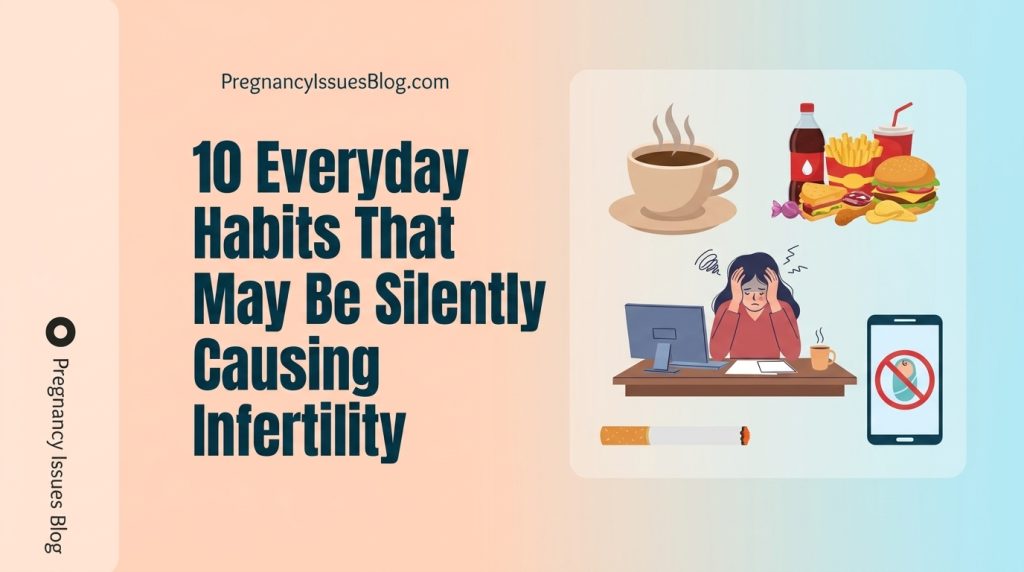
2. Excessive Caffeine Consumption
That third cup of coffee might be more than just a jitter-inducer.
High caffeine intake (over 300mg a day) has been linked to a longer time to conception.
Caffeine can interfere with the muscle contractions that help the egg travel through the Fallopian tubes to the uterus.
3. Reaching for “Low-Fat” Dairy
Ironically, the “healthy” choice might be the wrong one for fertility.
A large-scale Harvard study found that women who ate more low-fat dairy (skim milk, low-fat yogurt) had a higher risk of ovulatory infertility.
It appears that the process of removing fat from milk changes the balance of sex hormones in a way that can hinder ovulation.
4. Late-Night Screen Exposure
The blue light emitted by your smartphone or tablet suppresses melatonin, the hormone that tells your body it’s time to sleep.
Beyond rest, melatonin is a potent antioxidant that protects your eggs from damage.
Scrolling through social media at midnight essentially “tricks” your brain into skipping its nightly reproductive repair session.
5. Handling Thermal Receipt Paper
Many people don’t realize that standard receipt paper is often coated in BPA (Bisphenol A).
BPA is a known endocrine disruptor that can be absorbed through the skin. It mimics estrogen in the body and has been linked to lower egg counts and decreased sperm concentration.
6. Relying on “Diet” Sodas
Artificial sweeteners, particularly aspartame, are often linked to oxidative stress.
Regular consumption of diet sodas and “sugar-free” snacks can create an inflammatory environment in the body, making it harder for an embryo to implant successfully.
7. Wearing Constrictive Clothing
Skinny jeans and “shapewear” might look great, but they can be a fertility nightmare for men.
Tight clothing traps heat against the body, disrupting the temperature-sensitive process of sperm production. If you’re trying to conceive, it’s time to embrace the “boxer” life and breathable fabrics.
8. Skipping the Sun
Vitamin D is a crucial building block for sex hormones.
If your daily habit involves going from an indoor garage to an indoor office, you likely aren’t getting enough sunlight to synthesize “the sunshine vitamin.” A deficiency can lead to irregular cycles and poor follicular development.
9. The Chronic “Hurry Sickness”
We aren’t talking about major life trauma, but rather the daily “micro-stress” of rushing through traffic and meeting deadlines.
This constant state of “fight or flight” keeps your sympathetic nervous system activated, which signals to your body that it isn’t a safe time to carry a child.
10. Using Scented Products
“Clean” smelling candles, perfumes, and dryer sheets often contain phthalates.
These chemicals give scents their staying power but are notorious for disrupting the delicate hormonal dance required for conception.
Conclusion
You don’t have to overhaul your entire life tomorrow.
Start by swapping your plastic water bottle for glass, or turning off your phone an hour before bed.
By removing these silent hurdles, you allow your body’s natural fertility to take the lead.