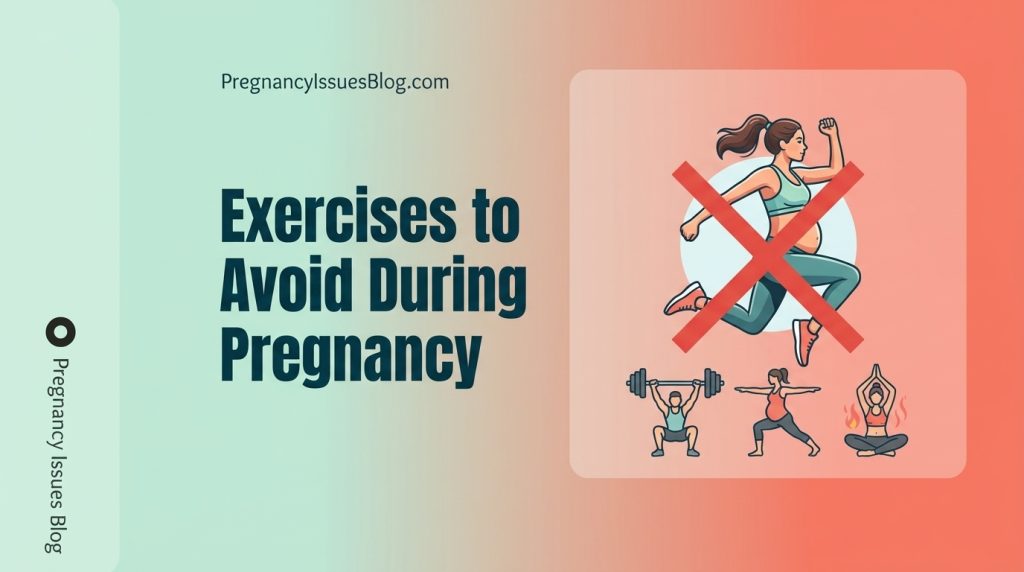
While staying active is highly encouraged, pregnancy is not the time to “go hard or go home.”
Your body is already performing the ultimate physical feat, manufacturing a central nervous system and a tiny set of lungs.
This requires a massive shift in your oxygen consumption (O2), blood volume, and joint stability.
Understanding which movements to bench for nine months isn’t about being fragile; it’s about being strategic.
Here is the definitive list of what to avoid to keep you and your passenger safe.
Table of Contents
Toggle1. High-Impact and Contact Sports
This might seem obvious, but it bears repeating.
Any activity where there is a risk of being hit in the abdomen, such as soccer, basketball, ice hockey, or kickboxing, needs to be sidelined.
Beyond the risk of a direct blow, these sports often involve sudden stops and changes in direction.
Your joints are significantly looser now due to the hormone Relaxin, making you much more susceptible to ligament tears and joint instability.
2. Activities with a High Fall Risk
As your bump grows, your center of gravity shifts forward.
Your brain hasn’t quite adjusted to this new “physics,” making your balance more precarious than usual.
-
Skip: Downhill skiing, horseback riding, and road cycling.
-
The Risk: A fall could lead to placental abruption, where the placenta separates from the uterine wall, a medical emergency. Stick to the stationary bike or the elliptical, where the risk of toppling is near zero.
3. Lying Flat on Your Back (After 20 Weeks)
In the second and third trimesters, the weight of the uterus becomes significant.
When you lie flat on your back (the supine position) for exercises like bench presses or traditional crunches, the uterus can compress the inferior vena cava.
This is the major vein that returns blood to your heart. Compression can lead to:
-
Dizziness and nausea for you.
-
Decreased blood flow and O2 delivery to the baby.
The Fix: Perform these exercises on an incline or side-lying position.
4. “Hot” Workouts (Hyperthermia)
Your body is already a high-functioning furnace. Pregnancy makes it harder for you to dissipate heat.
-
Avoid: Hot yoga (40∘C or 104∘F rooms), hot Pilates, or exercising in extreme outdoor heat.
-
The Science: Raising your core body temperature too high, especially in the first trimester, has been linked to neural tube defects. If you’re sweating profusely and feeling flushed, you’ve gone too far.
5. Traditional Core Work
You want a strong core for labor, but “strong” doesn’t mean “six-pack.”
Traditional crunches, sit-ups, and “double leg lifts” put immense outward pressure on the abdominal wall.
This can exacerbate Diastasis Recti (the separation of the abdominal muscles).
-
Avoid: Anything that causes your belly to “cone” or “dome” down the center.
-
The Swap: Focus on Transverse Abdominis (deep core) work, like bird-dogs or modified planks.
6. Breath Holding (The Valsalva Maneuver)
When lifting something heavy, many people instinctively hold their breath and “push” internally (the Valsalva maneuver).
This causes a rapid spike in blood pressure and puts extreme pressure on your pelvic floor.
-
The Rule: Always exhale on the exertion. If you have to hold your breath to lift a weight, that weight is currently too heavy for your pregnant body.
Red Flags: When to Stop Immediately
| Symptom | Potential Concern | Action |
|---|---|---|
| Vaginal Bleeding | Placental issues | Stop and call OB-GYN immediately. |
| Leaking Fluid | Premature rupture of membranes | Seek medical attention. |
| Dizziness/Faintness | Vena cava compression | Sit down and tilt to the left side. |
| Calf Pain/Swelling | Deep Vein Thrombosis (DVT) | Do not massage; call your doctor. |
| Chest Pain | Cardiac strain | Stop and rest; seek help if persistent. |
Conclusion
Exercise is your best friend during pregnancy, but it’s a friend that needs boundaries.
The goal for 2026 mamas is maintenance and mobility, not personal records.
If an exercise feels “off,” it probably is.
Trust your intuition over your fitness tracker every single time.