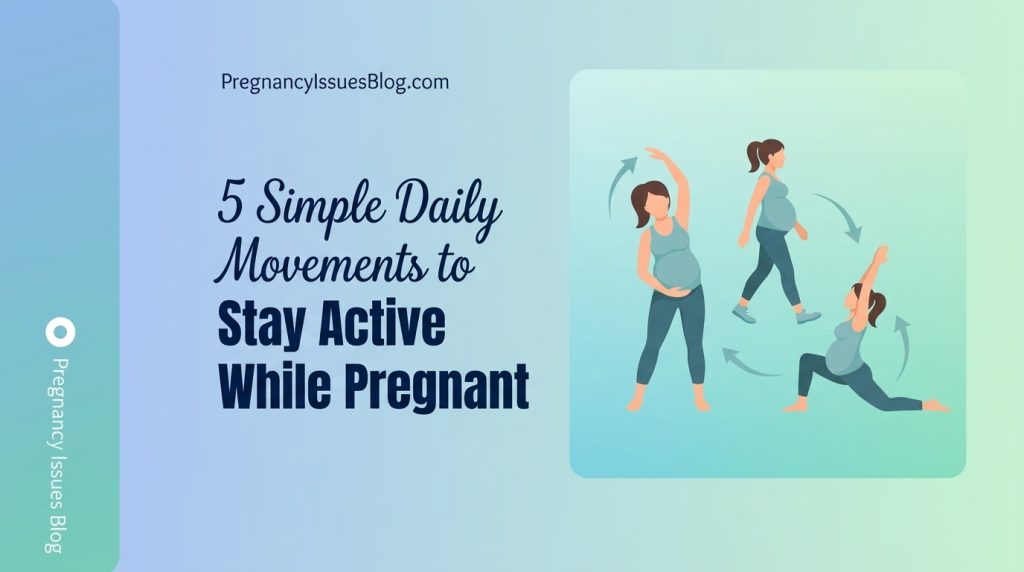
The old-school advice to “just sit down and put your feet up” for nine months has officially been moved to the archives.
While rest is undeniably a pillar of a healthy pregnancy, your body is essentially training for a marathon (labor) while simultaneously operating a high-output factory.
Keeping your muscles active and your blood flowing doesn’t just help with that “pregnancy glow”, it reduces the risk of common complications and sets the stage for a smoother recovery.
You don’t need a gym membership or a high-tech wearable to stay fit; you just need five minutes and a bit of floor space.
1. The Brisk Walk: The Universal MVP
If you only do one thing today, make it a walk.
Walking is the undisputed champion of prenatal exercise because it requires zero equipment and carries almost no risk of injury.
It helps regulate your blood pressure and keeps your digestion moving, which is vital when progesterone starts slowing things down.
-
The Goal: Aim for 20 minutes of steady movement. You should feel your heart rate lift, but you should still be able to gossip with a friend without gasping.
2. Pelvic Tilts: The Back-Pain Eraser
As your bump grows, your center of gravity shifts forward, putting immense strain on your lumbar spine.
Pelvic tilts are a gentle way to strengthen your deep core and alleviate that “achy” feeling at the end of the day.
-
How to do it: Get on all fours. As you inhale, let your belly drop slightly and look forward (the “Cow”). As you exhale, tuck your tailbone and round your back toward the ceiling (the “Cat”). Repeat 10 times.
3. Modified Squats: Training for the Big Day
Squats are the most functional movement you can perform.
They strengthen your glutes and thighs, which are the primary muscles you’ll rely on during labor.
-
How to do it: Stand with your feet slightly wider than your hips. Use a sturdy chair or a kitchen counter for balance if you feel “wobbly.” Slowly lower your hips as if you’re about to sit down, keeping your chest up and your weight in your heels.
4. The Butterfly Stretch: Opening the Gates
By the second and third trimesters, your hips can start to feel incredibly tight.
The butterfly stretch is a passive, relaxing way to improve flexibility in your inner thighs and pelvic region.
-
How to do it: Sit on the floor with the soles of your feet together and your knees dropping out to the sides. Hold your ankles and gently lean forward until you feel a comfortable stretch. Hold for 30 seconds. This is great to do while watching the news or reading.
5. Wall Push-Ups: Practical Strength
You’re about to be doing a lot of lifting, specifically, an 8-pound human and a very heavy diaper bag.
Building upper-body strength now will save your shoulders later.
-
How to do it: Stand about two feet away from a wall. Place your hands flat against the wall at shoulder height. Slowly lower your chest toward the wall, then push back to the start. Because you’re upright, there is no pressure on your abdominal wall, making it much safer than a traditional floor push-up.
Safety Guidelines for 2026 Mamas
| Rule | The Context |
| The Talk Test | If you can’t talk while moving, your baby needs more O2. Slow down. |
| Listen to Relaxin | Your joints are looser; avoid bouncy or “jerky” movements. |
| Hydrate First | Dehydration can trigger Braxton Hicks (false labor) contractions. |
| Cool Down | Avoid overheating; if you feel flushed or dizzy, stop and rest. |
Conclusion
Staying active doesn’t have to mean a 90-minute prenatal yoga class.
These five movements can be woven into your day, during a lunch break, while the kettle boils, or before you climb into bed.
Your body is doing something monumental; these small movements are just your way of saying “thank you” to the muscles that are carrying you through.
Which of these movements do you find easiest to fit into your current routine, or are you looking for more targeted exercises for a specific symptom like back pain?