Think of labor as the ultimate athletic event.
You wouldn’t show up to run a marathon without training, and giving birth is no different.
We’ve officially moved past the idea that “resting” is the only thing a pregnant person should do.
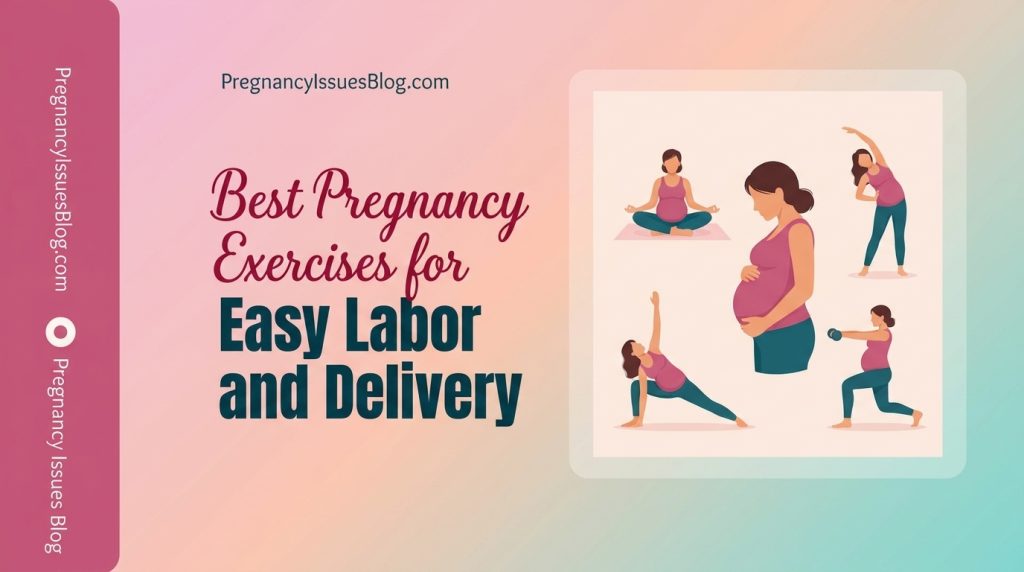
While there is no magic button for an “easy” delivery, certain exercises can strengthen the specific muscles used during labor, open your pelvis, and improve your stamina for the big day.
Here is your training plan for the “Marathon of Motherhood.”
1. The Pelvic Floor: The Powerhouse
Your pelvic floor muscles support your bladder, uterus, and bowel.
During delivery, these muscles need to be strong enough to push, but more importantly, flexible enough to relax and stretch.
-
-
The Exercise: Practice Kegels, but focus on the “release.” Imagine your pelvic floor is an elevator. Pull it up to the third floor, hold, and then slowly let it back down to the basement.
-
Why it works: Learning to consciously relax these muscles can help reduce the risk of tearing and may even shorten the pushing phase of labor.
-
2. Deep Squats: The Essential Opener
Squats are arguably the best exercise for labor prep.
They strengthen the thighs, which you’ll need if you choose to give birth in a vertical or squatting position.
-
The Exercise: Stand with feet wider than hip-width apart. Slowly lower your hips as far as comfortable, keeping your heels on the floor. If you need balance, hold onto a sturdy chair or a doorframe.
-
Why it works: Squatting can increase the pelvic opening by up to 20-30%, allowing more room for the baby to descend.
3. Pelvic Tilts (The Back-Saver)
As your bump grows, your lower back takes a beating.
Pelvic tilts (often done as the “Cat-Cow” stretch in yoga) help maintain flexibility in your spine and can even help the baby get into the optimal “head-down” position.
-
The Exercise: Get on your hands and knees. Inhale as you let your belly drop slightly and look up. Exhale as you tuck your tailbone and round your back toward the ceiling.
-
Why it works: This movement relieves pressure on the lower back and encourages the baby to move away from your spine (reducing “back labor”).
4. Bird-Dog: Core Stability
A strong core is your best defense against the “waddle” and late-pregnancy back pain.
The Bird-Dog exercise builds stability without putting unnecessary pressure on your abdominal wall.
-
The Exercise: From all fours, extend your right arm forward and your left leg back simultaneously. Hold for a few seconds, then switch. Keep your back flat, don’t let your belly sag.
-
Why it works: It strengthens the transverse abdominis, the deep core muscles that help you stay upright and provide power during pushing.
5. Butterfly Stretches: Hip Flexibility
This simple stretch targets the inner thighs and hips, making it easier for you to stay in comfortable positions during the first stage of labor.
-
The Exercise: Sit on the floor with the soles of your feet together and your knees dropping to the sides. Gently press your knees down with your elbows for a deeper stretch.
-
Why it works: It increases blood flow to the pelvic region and improves the flexibility of the hip joints.
Safety Guidelines for 2026 Mamas
| Rule | The Detail |
| The Talk Test | You should be able to carry on a conversation. If you’re gasping, slow down. |
| Hydration | Drink water before, during, and after. Dehydration can trigger Braxton Hicks. |
| Listen to Relaxin | Your joints are looser than usual. Avoid bouncy or jerky movements. |
| Red Flags | Stop immediately if you feel dizzy, see spots, or experience any leaking fluid. |
Conclusion
Preparing for delivery is about more than just a birth plan; it’s about physical readiness.
By incorporating these movements into your daily routine, you’re giving yourself and your baby the best possible start.
Remember, the goal isn’t “perfection”; it’s consistency.
Even ten minutes a day makes a difference.
Which of these exercises are you most excited to try, or are you looking for a more personalized routine based on your current fitness level?