When you decide it’s time to start a family, your kitchen suddenly becomes the most important room in the house.
While the “fertility industry” is flooded with expensive supplements and questionable “magic” teas, the actual science of conception often points back to the dinner plate.
Recently, we have the benefit of decades of research, most notably the Harvard Nurses’ Health Study, which proves that dietary choices can lower the risk of ovulatory infertility by over 60%.
This isn’t about a “crash diet”; it’s about optimizing your internal environment to support the delicate hormonal dance required for a healthy pregnancy.
Table of Contents
Toggle1. Complex Carbs: Stabilizing the Insulin Spike
Your ovaries are incredibly sensitive to insulin.
When you consume refined carbohydrates, think white bread, sugary cereals, or white rice, your body experiences a rapid spike in blood glucose (Glc).
This forces a massive release of insulin to bring those levels down.
High insulin levels can interfere with the signaling of Follicle-Stimulating Hormone (FSH) and Luteinizing Hormone (LH), leading to irregular ovulation.
-
The Science: Switching to complex carbs (quinoa, oats, brown rice) provides a slow, steady release of energy, keeping your hormones in a “safe zone.”
2. The Protein Pivot
One of the most robust findings in fertility science is the “Protein Effect.”
Research suggests that replacing just 5% of your total calorie intake from animal protein with plant protein can reduce the risk of ovulatory infertility by more than 50%.
Why? Plant proteins like lentils, chickpeas, and beans are rich in fiber and iron, whereas red meats are often associated with higher levels of inflammation and insulin resistance. You don’t have to go full vegetarian, but making “Meatless Monday” a daily habit could be a game-changer.
3. Healthy Fats: The Blocks of Life
Your hormones are literally synthesized from fats. If your diet is too low in fat, or consists of the “wrong” kinds (trans fats), your reproductive system may go into a “hibernation” mode.
-
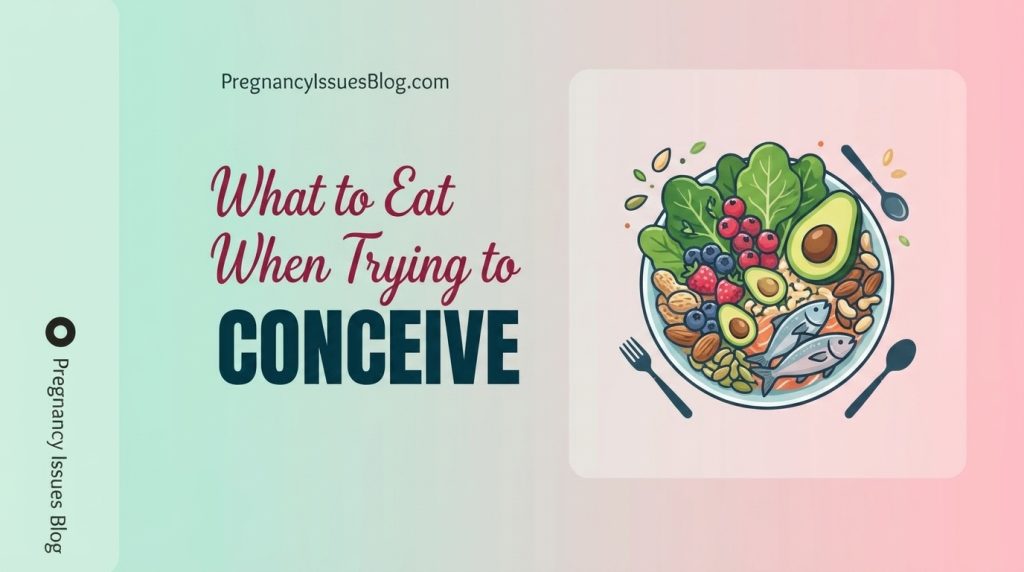
Monounsaturated Fats: Found in olive oil and avocados, these fats improve insulin sensitivity and lower inflammation.
-
Omega-3 Fatty Acids: Found in walnuts, chia seeds, and wild-caught salmon. These are critical for improving blood flow to the uterus and enhancing egg quality.
4. The Dairy Paradox
For years, “low-fat” was the health gold standard.
However, when it comes to trying to conceive (TTC), the data flips.
The Nurses’ Health Study found that women who consumed at least one serving of full-fat dairy per day had significantly better ovulatory function than those who consumed low-fat or non-fat dairy.
The theory?
Removing the fat from milk changes the balance of sex hormones within the liquid, which can inadvertently disrupt your own hormonal balance.
While you’re in the TTC phase, go for the whole milk or full-fat Greek yogurt.
5. Micronutrient Superstars
While a prenatal vitamin is essential, getting these nutrients through whole foods increases their bioavailability.
-
Folate (B9): Found in spinach and kale. It is essential for DNA synthesis and preventing early neural tube defects.
-
Iron: Non-heme iron (from plants) paired with Vitamin C increases absorption and has been linked to lower rates of infertility.
-
Zinc: Found in pumpkin seeds and oysters; it is a key player in egg development and, for partners, sperm quality.
The Daily Fertility Checklist
| Food Category | Top Choice | Scientific Benefit |
|---|---|---|
| Carbohydrates | Steel-cut oats/Quinoa | Stabilizes blood sugar and insulin. |
| Protein | Lentils/Chickpeas | Reduces ovulatory risk by 50%+. |
| Fats | Avocado/Walnuts | Supports hormone production. |
| Dairy | Whole milk/Full-fat Yogurt | Promotes healthy ovulation cycles. |
| Vegetables | Spinach/Broccoli | High in Folate (B9) for DNA health. |
Conclusion
Eating for fertility isn’t about deprivation; it’s about nourishment.
By focusing on whole, unprocessed foods that stabilize your blood sugar and provide the raw materials for hormones, you are giving your body the “all-clear” signal that it is safe to sustain a new life.
Start small—swap your white toast for whole grain, and your skim milk for whole, and trust the biology.
Are you currently focused on specific nutritional goals, such as managing your blood sugar levels, or are you looking for a more general approach to your fertility meal planning?