Welcome to the wild world of pregnancy, where suddenly everyone from your barista to your great-aunt has an opinion on whether you should be eating that piece of brie or lifting that grocery bag.
While we have more information than ever at our fingertips now, the sheer volume of “dos and don’ts” can feel like navigating a minefield.
The truth is, your body is incredibly resilient, but it is currently performing a biological miracle.
This means the rules of engagement for your daily life have shifted slightly.
Here is your evidence-based guide to what is truly safe and what is best left for the “post-push” celebration.
Table of Contents
Toggle1. In the Kitchen: The “Safe” Plate
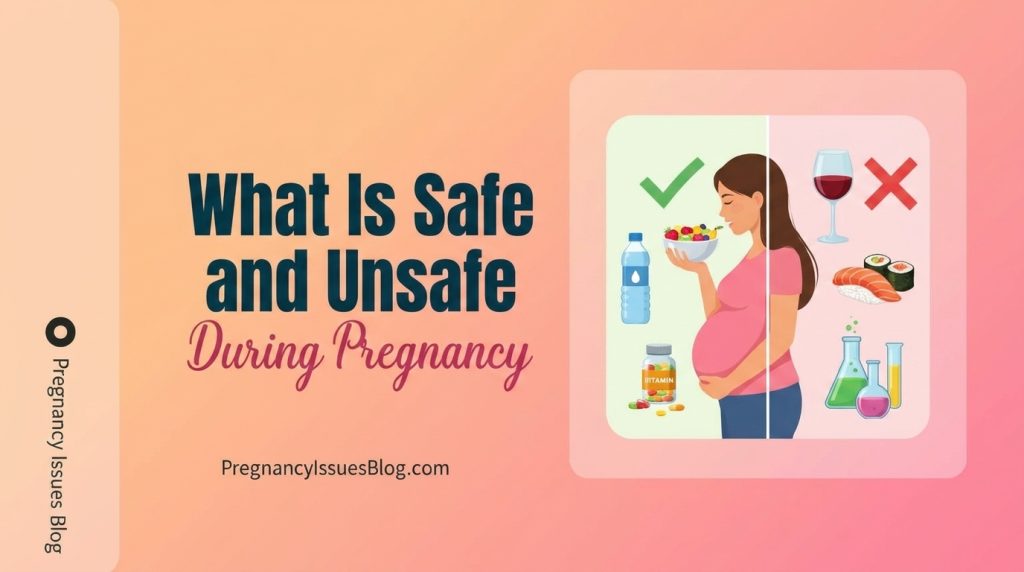
Most of the food anxiety in pregnancy stems from three scary words: Listeria, Salmonella, and Mercury.
What’s Unsafe?
-
High-Mercury Fish: Avoid large predators like swordfish, king mackerel, and tilefish. These heavy metals can cross the placenta and affect the baby’s developing nervous system.
-
Raw or Undercooked Proteins: This includes sushi, rare steaks, and raw sprouts. These are breeding grounds for bacteria that your pregnant immune system is less equipped to fight.
-
Unpasteurized Dairy: Avoid “raw” milk and soft cheeses (like some imported camembert) unless the label explicitly states they are pasteurized.
-
Alcohol: There is no known “safe” amount of alcohol. The current medical consensus remains zero.
What’s Safe (With a Catch)?
-
Caffeine: You don’t have to go cold turkey. Most experts agree that 200-300 mg of caffeine per day is safe. However, keep in mind that the half-life of caffeine in the blood increases by a factor of k = 3 during the third trimester, so that afternoon latte might keep you up all night.
-
Processed Meats: Deli meats and hot dogs are fine if you heat them until they are steaming. This kills any potential Listeria lurking in the package.
2. At the Gym: Movement as Medicine
Exercise is highly encouraged, but the type of movement matters. As your blood volume increases, your heart is working harder even when you’re sitting still.
-
Safe: Low-impact cardio (swimming, walking), prenatal yoga, and strength training (with modifications).
-
Unsafe: Contact sports (soccer, basketball), activities with a high fall risk (downhill skiing), and “Hot Yoga.” Raising your core body temperature too high, especially in the first trimester, can be dangerous for fetal development.
-
The “Talk Test”: If you can’t carry on a conversation while working out, you’re pushing too hard.
3. The Beauty Bar: Skincare and Self-Care
You want that pregnancy glow, but some products are “glow-blockers.”
-
Unsafe Skincare: Retinoids (Retin-A, Retinol) and high-dose Salicylic Acid. These are linked to birth defects when absorbed in high quantities. Switch to Bakuchiol or Glycolic Acid for a safer alternative.
-
Unsafe Heat: Hot tubs and saunas that raise your body temperature above 38.9°C (102°F) should be avoided. A warm bath, however, is perfectly safe and great for aching muscles.
-
Safe: Hair dye (though most doctors suggest waiting until the second trimester), most self-tanners, and professional prenatal massages (just make sure the therapist is certified).
4. Lifestyle & Home: The “Nitty Gritty”
-
The Litter Box: If you have a cat, you officially have a “get out of chores free” card. Cat feces can carry Toxoplasmosis. Let someone else handle the scooping.
-
Cleaning Supplies: Standard household cleaners are generally safe, but ensure the room is well-ventilated. Avoid heavy industrial solvents or lead-based paint stripping.
-
Travel: Most airlines allow travel until 36 weeks. Just remember to walk around the cabin every hour to prevent blood clots.
Summary Reference Table
| Category | Generally Safe | Generally Unsafe |
| Protein | Fully cooked meat, salmon, tofu | Sushi, raw oysters, swordfish |
| Beverages | Water, pasteurized juice, moderate coffee | Alcohol, unpasteurized “raw” cider |
| Activity | Swimming, walking, prenatal yoga | Scuba diving, skydiving, contact sports |
| Beauty | Vitamin C, Glycolic acid, Sunscreen | Retinol, Accutane, Hot tubs (>102°F) |
| Home | Routine cleaning (ventilated) | Changing cat litter, heavy pesticides |
Conclusion
The goal of these guidelines isn’t to wrap you in bubble wrap; it’s to provide a framework for a healthy, low-stress nine months.
If you accidentally ate a piece of unpasteurized cheese or had an extra cup of coffee, don’t panic.
The occasional slip-up is rarely a cause for concern.
The best thing you can do for your baby is to stay informed, stay hydrated, and keep an open line of communication with your OB-GYN or midwife.
Are you looking for a more specific list of safe medications for common ailments like headaches or seasonal allergies, or do you have everything you need for now?