Staying active while growing a tiny roommate is one of the best things you can do for your body and mind.
The old advice to “just sit on the couch and eat for two” has been officially retired.
Research now shows that consistent, safe exercise can reduce the risk of gestational diabetes, shorten labor, and, perhaps most importantly, help you maintain your sanity during the wild hormonal ride.
However, your body is changing rapidly.
What felt good in week 6 might feel like a core-strength nightmare in week 32.
Here is your guide to moving safely through every stage of pregnancy.
Table of Contents
ToggleThe Golden Rule: The “Talk Test”
Before we dive into the trimesters, let’s talk about intensity.
Gone are the days of monitoring your heart rate with mathematical precision.
Instead, use the Talk Test.
You should be able to carry on a conversation while exercising.
If you’re gasping for air, your baby is likely craving more oxygen, too.
Scale it back until you can tell me what you had for lunch without huffing.
Trimester 1: Listen to the Fatigue (Weeks 1–12)
In the first trimester, you aren’t dealing with a bump yet, but you are dealing with bone-deep exhaustion and “is-it-a-taco-or-a-baby” bloating.
-
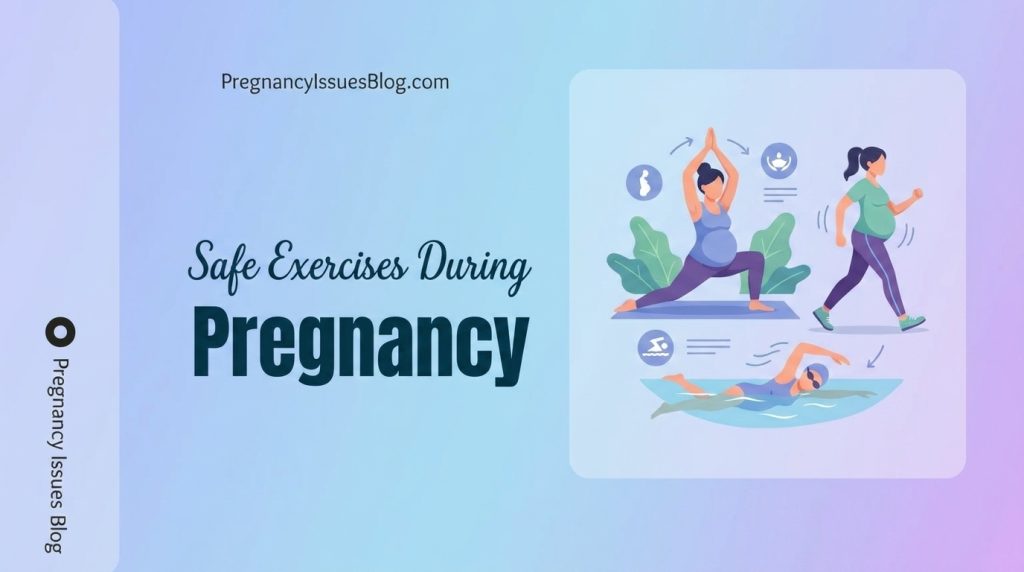
Walking: The undisputed MVP. It’s low impact, requires zero equipment, and helps clear the first-trimester brain fog.
-
Swimming: If you’re feeling nauseous, the cool water can be a lifesaver. Plus, it’s the only place where you’ll feel weightless as the weeks progress.
-
Pre-conception Routine: If you were a runner or a weightlifter before pregnancy, you can usually continue your routine, but avoid trying for “personal bests.” Your body is already doing its personal best by building a placenta.
Trimester 2: The Sweet Spot (Weeks 13–27)
This is the honeymoon phase. Your energy is back, the nausea has likely subsided, and you finally have a visible bump to show off at the gym.
-
Prenatal Yoga: This is excellent for keeping your muscles supple. However, be wary of the hormone Relaxin, which loosens your joints. It’s easy to overstretch right now, so focus on stability rather than extreme flexibility.
-
Modified Strength Training: Lifting weights is great for preventing back pain. Avoid lying flat on your back after week 20, as the weight of the uterus can compress a major vein (the vena cava). Try incline benches or seated exercises instead.
Trimester 3: The Slow Down (Weeks 28–40)
You’re in the home stretch.
Your center of gravity has shifted, and your lung capacity is being challenged by a tiny foot in your ribs.
-
Pelvic Tilts: These help relieve lower back pain and can encourage the baby to get into the optimal position for birth.
-
Stationary Cycling: It’s safer than a road bike because your balance is wonky right now, and it’s a great way to keep the blood flowing to your legs to prevent swelling.
-
Pelvic Floor Work: It’s not just about Kegels. Learning to relax your pelvic floor is just as important for delivery as the strength to contract it, and also helps to make the baby turn head down.
What to Avoid
Even the most fit mama should skip a few things:
-
Contact Sports: Anything with a risk of falling or being hit in the stomach (soccer, basketball, skiing).
-
Hot Yoga: Your body already has a hard time regulating heat; don’t push it in a 40°C room.
-
Heavy “Valsalva” Lifting: Avoid holding your breath while lifting heavy, as this puts too much pressure on your pelvic floor.
When to Stop Immediately
Stop exercising and call your doctor if you experience:
-
Vaginal bleeding or leaking fluid.
-
Dizziness or feeling faint.
-
Chest pain or a racing heart that doesn’t slow down.
-
Calf pain or swelling (could be a sign of a blood clot).
-
Decreased fetal movement.
Conclusion
Exercise during pregnancy isn’t about “bouncing back” or hitting fitness goals; it’s about preparing your body for the most athletic event of your life: labor and motherhood.
Be kind to yourself. If a 20-minute walk is all you can manage today, you’re still a champion.