The “big day” often feels like a final exam you haven’t studied for, but here’s the secret: your body already knows the material.
With the advanced monitoring and incredible medical support now available, the core of labor remains a deeply physiological event.
Preparing for labor isn’t about controlling the outcome; it’s about preparing your mind and body to handle the unpredictability of the journey.
Whether you’re planning an unmedicated birth or you’ve already got the anesthesiologist on speed dial, this guide will help you navigate the transition from “pregnant” to “parent.”
1. Education: Know Your Stages
You wouldn’t run a marathon without knowing where the water stations are.
Understanding the phases of labor helps you manage your energy.
-
-
Stage 1 (Early & Active): This is the longest part, where your cervix dilates from 0 to 10 cm.
-
Stage 2 (Pushing): The “work” part. This can last from a few minutes to a few hours.
-
Stage 3 (Placenta): The often-forgotten final step, where the placenta is delivered.
-
2. Physical Prep: Priming the Engine
In the final weeks (around week 34-36), you can start specific physical preparations to help reduce the risk of tearing and prepare your muscles.
-
Squats: These help open the pelvic outlet. Aim for a wider stance to accommodate the bump.
-
Perineal Massage: Research suggests that regular massage in the final weeks can increase tissue elasticity and reduce the likelihood of episiotomies.
-
Pelvic Tilts: Essential for relieving lower back pressure and helping the baby get into the optimal “head-down” position.
3. The Math of Contractions
We now have apps to track everything, but the “5-1-1 Rule” remains the gold standard for when to head to the hospital or birth center.
-
5: Contractions are 5 minutes apart.
-
1: Each contraction lasts for 1 minute.
-
1: This pattern has continued for at least 1 hour.
4. The Birth “Preferences” Sheet
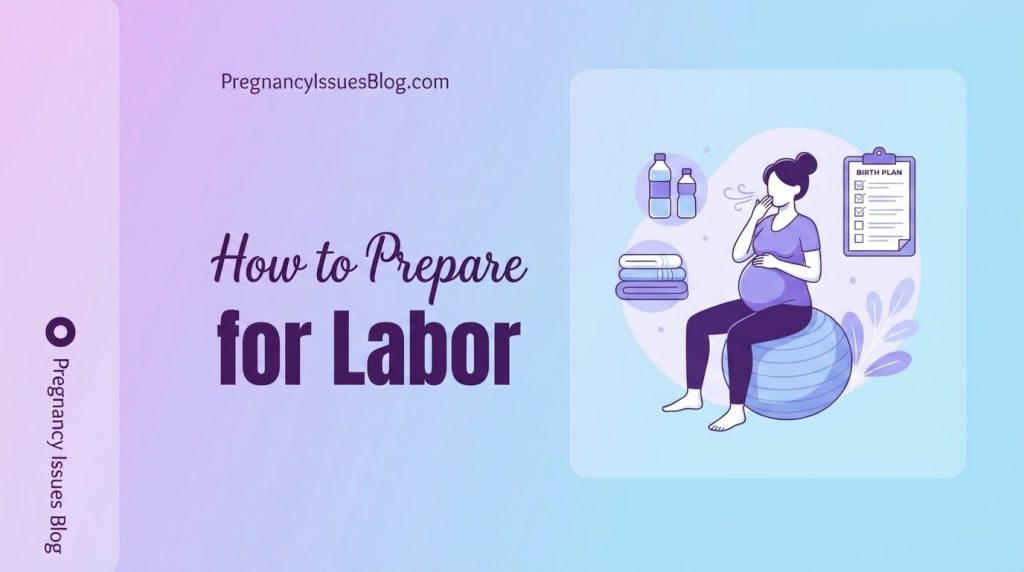
We’ve moved away from the term “Birth Plan” because labor rarely follows a script. Think of this as a preference sheet that covers:
-
Environment: Low lighting, music, or a quiet room.
-
Pain Management: Epidural, nitrous oxide, or hydrotherapy.
-
Interventions: Your stance on episiotomies or continuous monitoring.
The Key: Be flexible. The goal isn’t the process; the goal is a healthy baby and a healthy you.
5. The Mental Game: Breathing
When pain hits, our instinct is to tense up and hold our breath. This reduces oxygen to your muscles and the baby, making labor more painful.
-
-
Low and Slow: Focus on deep “belly breaths.” Inhale for 4 counts, exhale for 8.
-
Horse Lips: Relaxing your jaw and vibrating your lips (like a horse) helps relax the pelvic floor, there is a direct physiological link between the two.
-
6. Packing the Essentials
Don’t overpack. You aren’t moving in; you’re visiting.
-
-
For Mom: Comfortable robe, long phone charging cable, lip balm (hospitals are dry!), and high-protein snacks for early labor.
-
For Baby: A “going home” outfit, a car seat (already installed!), and a few swaddles.
-
For Partner: Snacks, a change of clothes, and a camera.
-
The Final Countdown Checklist
| Timeline | Action Item | Why It Matters |
| Week 34 | Start Perineal Massage | Increases elasticity for delivery. |
| Week 36 | Pack the Hospital Bag | Babies don’t always wait for their due date. |
| Week 37 | Install the Car Seat | Most fire stations will check the installation for you. |
| Daily | 10 Minutes of Squats/Tilts | Keeps the pelvis mobile and baby engaged. |
| Anytime | Practice Breathing | Builds muscle memory for the “heat of the moment.” |
Conclusion
Labor is as much a mental hurdle as it is a physical one.
By educating yourself on the stages, preparing your body with gentle movement, and keeping your birth preferences flexible, you are taking the “unknown” out of the equation.
You’ve got this!