When pregnancy nutrition comes up, the conversation almost always circles back to the same two things: folic acid and iron.
Both matter enormously, but they are not the whole story. Quietly sitting in the background, doing work that is arguably more foundational than either, is protein.
Protein builds your baby.
Not metaphorically — literally.
Every organ, every muscle fibre, every strand of hair, every enzyme driving your baby’s metabolism is constructed from amino acids derived from the protein you eat.
And yet, protein rarely gets its own antenatal counselling session. Most pregnant women have no idea how much they need, whether their diet is delivering it, or what happens when it falls short.
This article puts protein where it belongs: at the centre of the pregnancy nutrition conversation.
Table of Contents
ToggleWhat Protein Does During Pregnancy
Protein is not a single thing. It is a broad category of molecules made up of amino acids, the body’s primary building material.
During pregnancy, protein is recruited for an extraordinary range of tasks simultaneously:
- Building fetal tissue — including the brain, muscles, organs, skin, and connective tissue
- Growing the placenta, which is itself a protein-dense organ responsible for every nutrient and oxygen transfer to your baby
- Expanding your blood volume by producing plasma proteins like albumin
- Synthesising hormones and enzymes that regulate fetal growth, immune function, and metabolism
- Supporting your own tissue repair, including the uterine growth required to house a growing baby
- Fuelling breast tissue development in preparation for milk production
Perhaps most critically, protein plays a central role in fetal brain development.
The amino acid tyrosine is a precursor to dopamine and norepinephrine, neurotransmitters that shape how your baby’s brain is wired from the very beginning.
No other macronutrient carries this range of responsibility in a pregnancy. Carbohydrates fuel. Fats protect. Protein builds.
How Much Protein Do You Actually Need?
The numbers here are more substantial than most women expect — and they increase as pregnancy progresses.
For a non-pregnant adult woman, the general recommendation is around 0.8 grams of protein per kilogram of body weight per day.
Pregnancy significantly raises this:
- First trimester: approximately 1.2g per kg/day — growth is just beginning, but foundational tissue-building is already underway
- Second trimester: approximately 1.5g per kg/day — fetal growth accelerates considerably
- Third trimester: approximately 1.75–2.0g per kg/day — the period of most rapid growth, requiring the highest protein intake
In practical terms, for a woman weighing 65kg in her third trimester, this translates to roughly 110–130 grams of protein per day, nearly double the pre-pregnancy requirement.
Many international bodies, including the WHO and the Food and Nutrition Board, have set more conservative estimates, but recent research consistently shows that higher protein intake in pregnancy is associated with better birth weight outcomes, reduced risk of preterm birth, and improved fetal neurodevelopment.
The simple takeaway: most pregnant women need significantly more protein than they are currently eating, and this need grows with every trimester.
Signs You Are Not Getting Enough
Protein deficiency in pregnancy rarely announces itself dramatically.
Instead, it accumulates quietly through a pattern of symptoms that are easy to dismiss:
- Persistent fatigue that is heavier than typical pregnancy tiredness
- Swelling in the legs, ankles, and feet not explained by heat (low albumin causes fluid retention)
- Slow maternal weight gain despite eating adequately
- Muscle weakness or significant muscle loss
- Poor wound healing or recurring infections
- Slow fetal growth detected on ultrasound
- Cravings for protein-rich foods — your body’s way of signalling a gap
Severe protein deficiency, rare in most settings but more common where food security is limited, is associated with intrauterine growth restriction (IUGR), low birth weight, impaired immune development, and long-term metabolic consequences for the child that can persist into adulthood.
The Best Protein Sources for Pregnant Women
Not all protein is equal.
The quality of a protein source is measured by its amino acid completeness, whether it contains all nine essential amino acids the body cannot produce on its own.
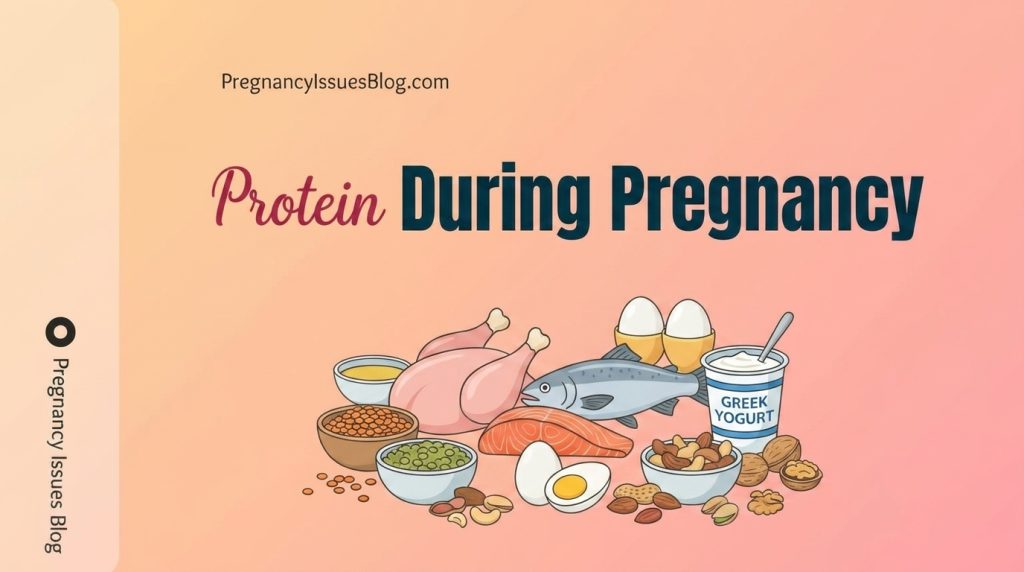
Complete protein sources (animal-based):
- Eggs — one of the most bioavailable protein sources available, with roughly 6g per egg
- Chicken and turkey — lean, versatile, and high in protein (about 25–30g per 100g)
- Fish and seafood — excellent protein with the added benefit of omega-3 fatty acids; choose low-mercury options like salmon, sardines, tilapia, and mackerel
- Beef and lamb — also provide iron and zinc alongside protein
- Dairy — milk, yoghurt, and cheese deliver both protein and calcium in one serving
Complete or near-complete plant proteins:
- Soy and edamame — among the very few plant foods with a full amino acid profile
- Quinoa — a grain that functions as a complete protein
- Moringa — notable protein content with exceptional micronutrient density
Plant-Based Pregnancies: Getting Enough Without Meat
Vegetarian and vegan pregnant women can absolutely meet their protein needs, but it requires deliberate planning.
Plant proteins are generally less bioavailable than animal proteins, and most are incomplete on their own, missing one or more essential amino acids.
The strategy is protein complementation, combining plant sources throughout the day to cover all essential amino acids:
| Pairing | Why It Works |
|---|---|
| Rice + beans or lentils | Complementary amino acid profiles |
| Peanut butter + whole grain bread | Together form a complete protein |
| Hummus + pita or flatbread | Chickpeas and grains complement each other |
| Tofu + quinoa | Both near-complete; together excellent |
You do not need to combine these at every single meal, achieving the full amino acid range across the day is sufficient.
Good plant-based protein staples include: lentils (18g per cooked cup), black-eyed peas (13g), chickpeas (15g), tofu (10g per 100g), pumpkin seeds (9g per 30g), groundnuts/peanuts (7g per 30g), and soy milk (7–8g per cup).
Protein Timing: Does It Matter When You Eat It?
Emerging research suggests that how protein is distributed across meals matters as much as the total daily amount.
Concentrating all your protein in one meal, a common pattern where large amounts of meat or fish are eaten only at dinner, limits how efficiently the body can utilise it.
Spreading protein across three to four meals and snacks throughout the day appears to support better muscle synthesis, more stable blood sugar levels, and more consistent fetal nutrient delivery.
A practical target is to include at least 25–30 grams of protein at each main meal.
High-protein snack options include boiled eggs, Greek yoghurt, a handful of nuts, peanut butter on crackers, or a small portion of bean-based stew. These are accessible, affordable, and genuinely effective.
What Blocks Protein Absorption — And What Helps
Even adequate protein intake can be undermined if absorption is compromised:
Factors that reduce protein utilisation:
- Chronic nausea causing consistently low food intake
- A diet heavily dominated by refined carbohydrates with little protein diversity
- Very high-fibre meals eaten simultaneously (can reduce amino acid absorption speed)
- Zinc deficiency — zinc is essential for protein synthesis and is commonly low in women whose diets are high in unrefined grains
Factors that support protein utilisation:
- Adequate caloric intake overall — when calories are insufficient, protein is burned for energy rather than used for building
- Vitamin B6, found in poultry, fish, bananas, and potatoes — critical for amino acid metabolism
- Vitamin C — supports the absorption of plant-based iron that often accompanies plant proteins
Conclusion
Folic acid lays the groundwork. Iron keeps the system running. But protein is the raw material from which your baby is actually constructed — cell by cell, organ by organ, from the very first weeks of development through to the final days before birth.
The gap between how much pregnant women need and how much most are actually eating is real, and it has consequences, for birth weight, for brain development, for postpartum recovery, and for your baby’s long-term health trajectory.
This is not a call for expensive supplements or unrealistic dietary overhauls. It is a call for awareness. Know your numbers.
Diversify your sources. Spread it through your day. And treat protein not as an optional extra, but as the essential foundation it has always been.