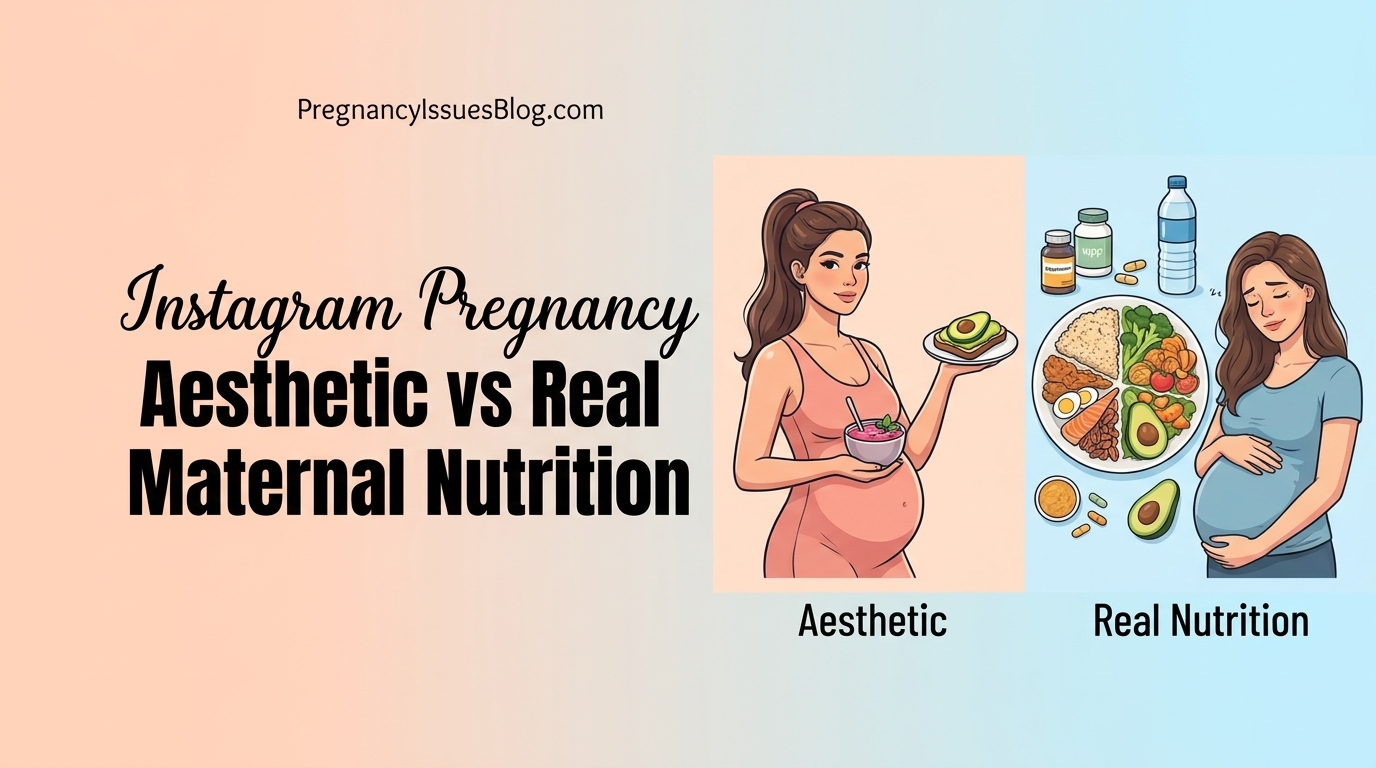
You have the apps, the books, and a Pinterest board titled “Nutritious Bump Meals.”
You know exactly how many milligrams of choline you need and which fish have the lowest mercury.
Yet, there you are at 9:00 PM, standing in the kitchen eating dry cereal out of the box because the thought of a salmon salad makes you want to cry.
This is the Knowledge-Practice Gap.
It’s the frustrating space between “I know what I should do” and “I am actually doing this.”
If you’ve been beating yourself up for not being a “perfect” eater, it’s time to stop.
The gap isn’t caused by a lack of willpower; it’s caused by a complex cocktail of biology, psychology, and environment.
Table of Contents
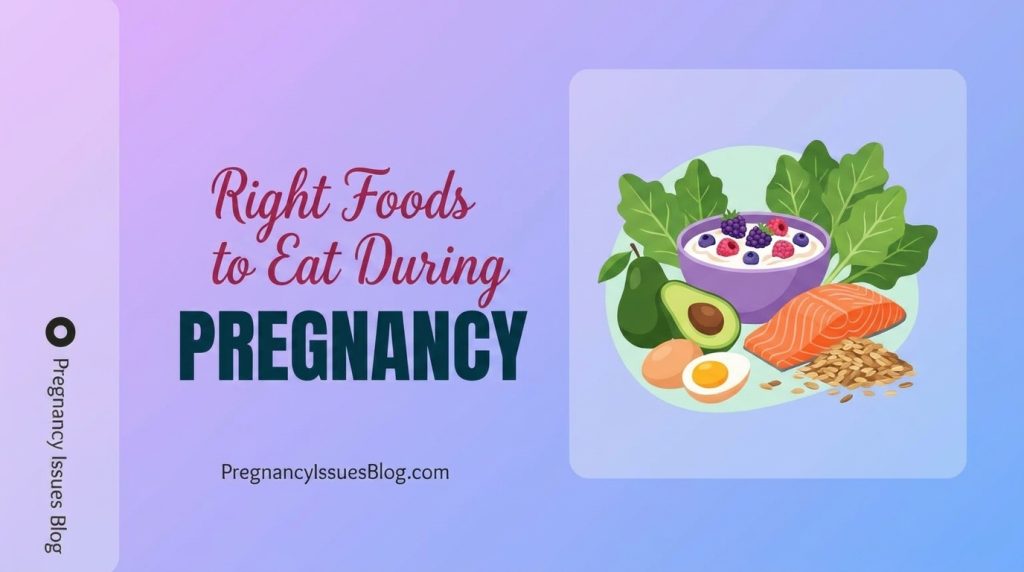
ToggleWhy Knowing the Right Foods to Eat During Pregnancy Doesn’t Always Mean You Actually Eat Them
We live in the information age.
Within three seconds of a Google search, any expectant mother can find a list of the “Top 10 Superfoods for Fetal Brain Development.”
But information is not a behavior.
If knowing were enough, we’d all be Olympic athletes with perfect skin.
In pregnancy, the gap between knowledge and practice is particularly wide because your body and mind are undergoing a hostile takeover.
1. The Biological Saboteur
You might know that kale is a folate powerhouse, but if your first trimester has decided that green vegetables smell like wet garbage, that knowledge is useless.
Pregnancy aversions are an evolutionary survival mechanism.
Historically, bitter tastes were associated with toxins.
When you’re pregnant, your “toxin radar” is set to sensitive.
Often, the foods we know are healthy (broccoli, salmon, eggs) are the ones the body rejects during the “nausea phase.”
In this stage, survival trumps optimization. Eating a plain bagel is better than eating nothing at all.
2. Decision Fatigue and the “Pregnancy Brain”
Every meal during pregnancy feels high-stakes.
You aren’t just choosing lunch; you’re choosing the building blocks for someone’s future nervous system.
This creates immense decision fatigue.
By the time you finish a workday and navigate the physical discomfort of a growing bump, your brain’s “Executive Function” is exhausted.
When the cognitive load is too high, we default to the path of least resistance.
This is why you can give a lecture on the benefits of Omega-3s while simultaneously ordering a pizza, your brain simply lacks the “RAM” to execute a complex, healthy meal.
3. The Structural Reality
We often talk about nutrition as if it exists in a vacuum.
In reality, it exists in a budget and a schedule.
-
Time: Prepping fresh produce takes time that a working or tired mother might not have.
-
Access: Food deserts or the lack of high-quality grocery stores nearby makes “knowing” the right foods a moot point.
-
Cost: While we’ve discussed affordable eating, the perception that healthy eating is expensive can be a powerful psychological barrier that stops action before it starts.
4. The All-or-Nothing Trap
Perhaps the biggest reason for the gap is the “Perfect Mom” Guilt.
When we slip up and eat something “unhealthy,” the shame spiral kicks in.
We think, “Well, I already ruined the day with those fries, I might as well give up on dinner.”
This all-or-nothing thinking is the enemy of the practice.
The gap grows wider when we treat nutrition like a pass/fail exam rather than a continuous spectrum.
How to Actually Bridge the Gap
How do we move from knowing to doing without losing our minds?
-
Lower the Bar: Instead of a “perfect meal,” aim for “better than before.” If you can’t cook a salmon dinner, can you take an Omega-3 supplement and eat a tuna sandwich?
-
Outsource the Decisions: Use meal plans or “default” meals. If Tuesday is always “Bean Burrito Night,” you don’t have to use any mental energy to be healthy.
-
Change the Environment: Don’t rely on willpower; rely on your pantry. If the healthy choice is the easiest one (e.g., pre-washed spinach, chopped fruit), the gap shrinks naturally.
Conclusion
If you are struggling to eat the “right” things, you aren’t a failure.
You are a human being navigating a massive physiological transition.
Information is just the map; your daily reality is the terrain.
Sometimes the terrain is rocky, and you have to take a detour.
That’s okay.
Just keep moving forward.