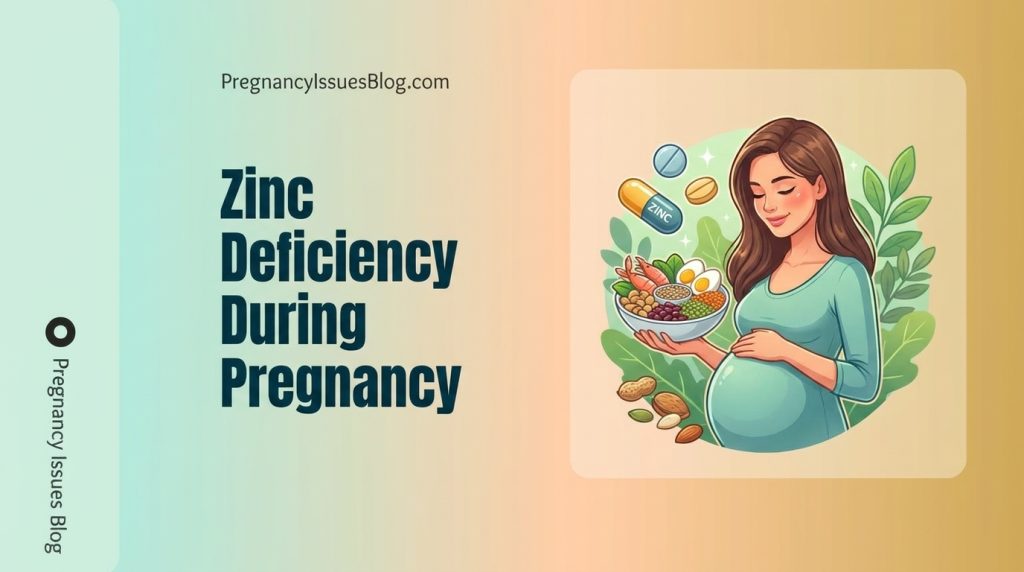
While everyone talks about folic acid and iron, the moment that stick turns blue, zinc is often the “supporting actor” that deserves a leading role.
It’s essential for over 300 enzymatic reactions in your body, yet it remains one of the most underrated nutrients in prenatal care.
Here is a comprehensive blog outline and the full article designed to help you navigate this “silent” nutrient.
Table of Contents
ToggleZinc Deficiency During Pregnancy: The Nutrient Nobody Talks About But Everybody Needs
When you find out you’re pregnant, the nutritional advice usually hits you like a tidal wave.
You’re told to load up on Folic Acid for the brain, Iron for the blood, and Calcium for the bones.
But there is a quiet powerhouse working behind the scenes that rarely gets a shout-out on the “top five” lists: Zinc.
Think of Zinc as the “Master Builder” of the mineral world.
While other nutrients provide the raw materials, zinc is the foreman on the construction site, ensuring every cell divides correctly and every strand of DNA is laid down with precision.
Why Zinc is the DNA Architect
Pregnancy is essentially a marathon of cell division.
From a single cell to a complex human being with trillions of them, the process requires constant biological “proofreading.”
Zinc is a critical component of DNA synthesis.
Without adequate zinc, the instructions for building your baby’s organs and limbs can become slightly scrambled.
It’s the mineral responsible for ensuring that the rapid growth happening inside you stays on track and on schedule.
Benefits for the Expectant Mother
It isn’t just about the baby; your body is undergoing a massive physiological overhaul.
Zinc provides several key benefits for the mother:
-
Immune Resilience: Since your immune system is naturally suppressed during pregnancy (so your body doesn’t “reject” the baby), you are more prone to sniffles and infections. Zinc acts as a vital shield, helping your T-cells function properly.
-
Skin and Tissue Repair: As your belly grows, your skin stretches. Zinc is essential for collagen production and wound healing, which can help with skin integrity and recovery after delivery.
-
The “Pregnancy Brain” Buffer: Some studies suggest that zinc plays a role in neurotransmitter function, potentially helping to stabilize the “mood swings” that come with massive hormonal shifts.
Impact on Baby’s Development
Research has shown a direct correlation between maternal zinc levels and birth outcomes.
Zinc deficiency has been linked to low birth weight and a higher risk of preterm delivery.
Furthermore, zinc is highly concentrated in the brain during fetal development.
It assists in the formation of the structural components of the brain and the functional pathways that the baby will use for learning and memory later in life.
It’s quite literally the “brain food” no one is talking about.
How to Spot a Deficiency
Zinc deficiency is notoriously “quiet.”
It doesn’t always show up as a dramatic medical crisis; instead, it looks like common pregnancy annoyances:
-
Unusual hair thinning or loss.
-
A lingering cold that won’t go away.
-
Loss of appetite or a change in the sense of taste and smell.
-
White spots on your fingernails or brittle nails.
Because these can be written off as “just being pregnant,” many women remain deficient without realizing it.
Filling the “Zinc Gap”
The daily recommended intake for pregnant women is roughly 11mg to 12mg.
While that sounds small, your body doesn’t store zinc, meaning you need a fresh supply every single day.
| Source | Best Options | Note |
| Animal-Based | Beef, Lamb, Pork, and Cooked Oysters. | Animal proteins contain “ligands” that make zinc easier to absorb. |
| Plant-Based | Pumpkin seeds, Chickpeas, Lentils, and Cashews. | These contain phytates, which can block zinc absorption. |
Pro-Tip: If you rely on plant-based sources, soaking your beans and seeds or choosing sprouted grains can help neutralize phytates, making the zinc more “bioavailable” to your body.
A Word on Supplements
Before you rush to the vitamin aisle, check your prenatal vitamin.
Most contain some zinc, but the quality and amount vary.
It’s also important to note that high levels of iron (which many pregnant women take) can actually interfere with zinc absorption.
Always consult your midwife or OB-GYN before adding a standalone zinc supplement.
Too much zinc can interfere with copper absorption, creating a new set of imbalances.
Conclusion
Zinc might not have the marketing budget of Folic Acid, but it is an absolute non-negotiable for a healthy pregnancy.
By focusing on zinc-rich foods and ensuring your levels are steady, you’re giving your baby and your own body the architectural support needed for the most important “build” of your life.