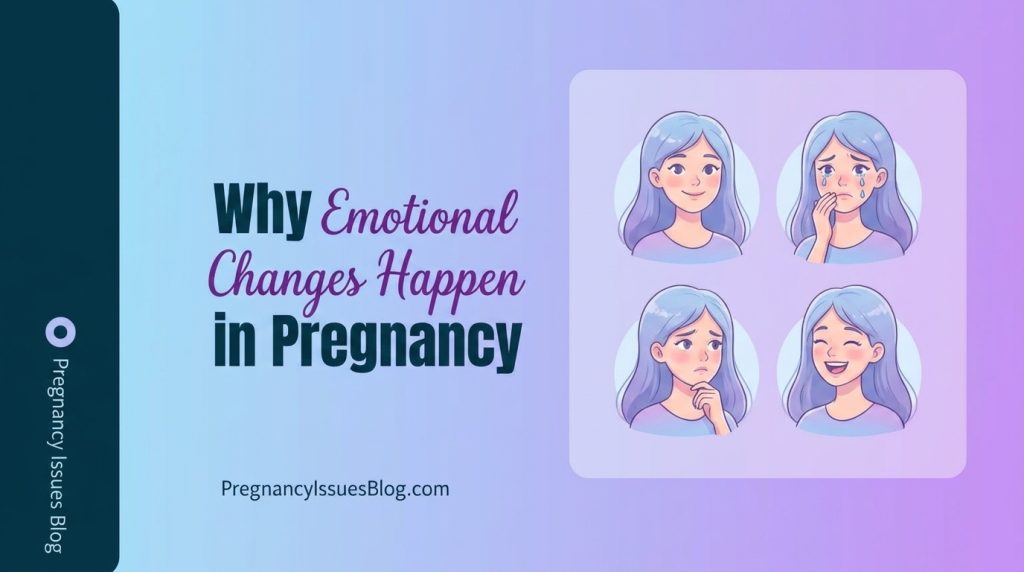
If you’ve found yourself weeping because a laundry detergent commercial featured a particularly cute puppy, or if you’ve transitioned from “pure bliss” to “unreasonable rage” because your partner breathed too loudly, welcome to the club.
We’ve now finally moved past the era of telling pregnant people to just “enjoy the glow.”
The truth is that pregnancy is a total biological and psychological overhaul.
It’s a period of intense emotional volatility that is as much about chemistry as it is about the life-changing reality of becoming a parent.
Here is why your brain feels like it has fifty tabs open and how to manage the noise.
Table of Contents
Toggle1. The Hormonal Highjack
Let’s look at the hard data.
By the time you reach the third trimester, your body produces more estrogen in a single day than a non-pregnant woman produces in three years.
These massive surges in Estradiol (E2) and Progesterone (P4) act as “signal jammers” for the neurotransmitters in your brain that regulate mood.
Specifically, these hormones interact with Serotonin (your “feel-good” chemical) and GABA (your “calm-down” chemical).
When these levels fluctuate rapidly, your threshold for stress drops.
You aren’t “being dramatic”; your brain is physically recalibrating its emotional response system in real-time.
2. The Identity Shift: Matrescence
You’ve heard of adolescence, but now, we are finally prioritizing the term Matrescence.
Just like puberty, this is a developmental transition characterized by massive physical, hormonal, and social changes.
Matrescence involves a profound identity shift.
You are mourning your “old self”, the version of you that was spontaneous, independent, and perhaps more career-focused, while simultaneously trying to meet the “new self” that is a parent.
This “identity wobble” is often the root of the anxiety and overwhelm that many mistake for simple mood swings.
It is the psychological equivalent of an earthquake, and it’s perfectly normal to feel a bit unsteady.
3. The Physical Connection
You cannot separate your mind from your body, especially during pregnancy.
Chronic physical discomfort is an emotional drain.
-
Sleep Deprivation: If you’re waking up every two hours to pee or wrestling with a pregnancy pillow, your brain’s “prefrontal cortex”, the part responsible for logic, essentially goes offline.
-
Blood Sugar Spikes: Your body’s insulin response changes during pregnancy. “Hanger” (hungry-anger) is a very real biological event when your glucose levels dip.
-
Fatigue: Your body is essentially running a 40-week marathon while operating a high-output factory. Of course, your fuse is shorter; you’re exhausted!
4. How to Cope: Your Toolkit
Managing these changes isn’t about “fixing” your emotions, it’s about building a better container for them.
| Strategy | How to Implement | The Benefit |
| The Information Diet | Limit “baby-prep” scrolling to 30 minutes a day. | Reduces Cortisol spikes from “Decision Fatigue.” |
| Radical Boundaries | Use the phrase: “I’m not looking for advice on that right now.” | Protects your energy from external stress. |
| The 5-5-5 Reset | Name 5 things you see, hear, and feel during a panic spike. | Grounds your nervous system in the present. |
| Micro-Naps | Even 10 minutes of horizontal time with eyes closed. | Allows your brain to “reboot” its logic centers. |
5. When to Seek Professional Support
While “moodiness” is a standard part of the pregnancy package, it is vital to distinguish it from Perinatal Mood and Anxiety Disorders (PMADs).
The Red Flags:
-
Your “low” mood lasts for more than two weeks without a break.
-
You feel “numb” or “empty” rather than just moody.
-
You are having intrusive, scary thoughts that won’t go away.
-
You feel a total loss of interest in things you used to love.
If you find yourself in these categories, please speak with your midwife or OB-GYN.
We now view mental health check-ins as just as critical as your ultrasound or blood pressure screen.
Seeking help is a proactive, powerful move for both you and your baby.
Conclusion
The emotional journey of pregnancy is intense because it’s a period of total transformation.
If you’re feeling everything all at once, remember: you’re not just “hormonal”, you’re becoming someone new.
Be as kind to your mind as you are to your bump.