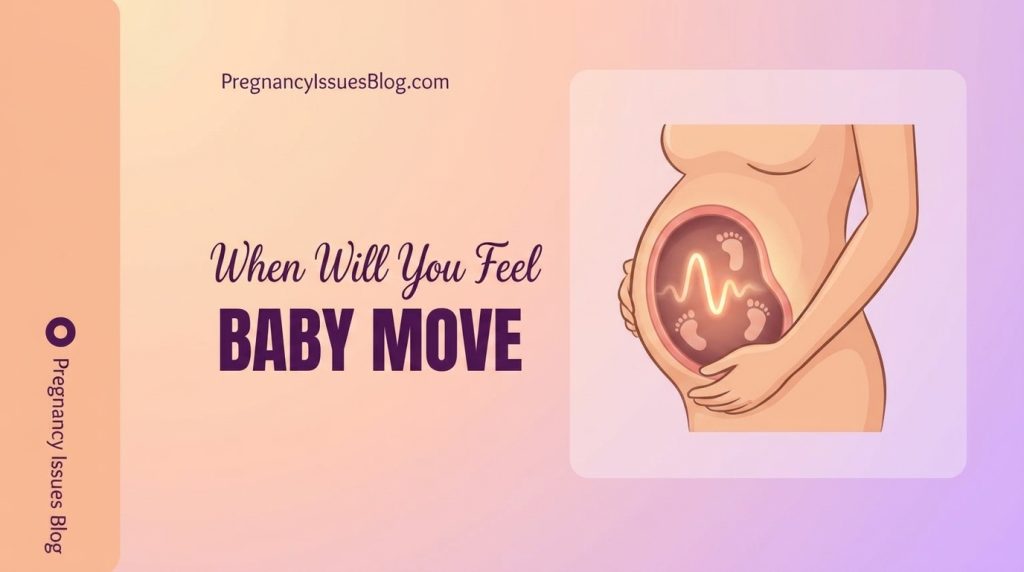
Of all the milestones in pregnancy, nothing quite compares to the first time you feel a flutter from within.
It’s the moment the abstract idea of “being pregnant” becomes a physical, undeniable reality.
In the medical world, this phenomenon is known as quickening.
While technology now brings us high-resolution 4D scans and AI-powered wearables that can track fetal heartbeats in real-time, the internal experience of quickening remains a deeply personal, low-tech magic.
Here is everything you need to know about when, and how, you’ll feel those first tiny somersaults.
What Exactly is Quickening?
Quickening is the term used to describe the first fetal movements a pregnant person can perceive.
Your baby has actually been moving since about week 7 or 8, but they are currently so small, and the amniotic fluid is so plentiful, that their tiny “karate chops” don’t hit the uterine wall with enough force for you to notice.
As the baby grows and their nervous system matures, their movements become more coordinated and powerful.
Eventually, those movements “break through” to your sensory nerves.
The Timeline: When the Magic Happens
The window for quickening is wide, and “normal” covers a lot of territory.
Generally, you can expect to feel movement between weeks 16 and 24.
| Mother’s History | Typical Timing | Why? |
| First-Time Moms | 20–24 Weeks | You aren’t sure what you’re looking for and often mistake it for gas. |
| Experienced Moms | 16–18 Weeks | Your uterine muscles are more relaxed, and you recognize the sensation instantly. |
“Was That the Baby?” What It Feels Like
Early movement doesn’t feel like a kick.
In the beginning, it’s subtle enough that you might miss it if you’re busy or moving around. Common descriptions include:
-
Butterflies: A light, fluttering sensation in the lower abdomen.
-
Popcorn Popping: Tiny, rhythmic “pips” against your skin.
-
Bubbles or Gas: Many women dismiss early quickening as digestive issues.
-
A Tiny Fish: The sensation of something small swimming or “swishing” by.
Pro-Tip: If you’re eager to feel something, try lying on your left side in a quiet room after a meal. The surge in your blood sugar often gives the baby a “sugar rush,” and the stillness makes you more likely to catch a subtle flutter.
Factors That Delay the “Pop”
If you’ve hit week 20 and haven’t felt a thing, don’t panic.
Several biological factors act as “mufflers” for fetal movement:
1. Anterior Placenta
If your placenta is anterior, it means it has attached to the front of your uterus (the side closest to your belly button).
It acts like a giant pillow between the baby’s feet and your nerves.
You will still feel movement eventually, but it often takes a few extra weeks to “feel around” the placenta.
2. Maternal Body Type
Extra layers of tissue on the abdominal wall can make it harder to feel the subtle early movements.
Conversely, those with a more slender build may feel movements slightly earlier.
3. Baby’s Position
If the baby is facing your spine (posterior position), their kicks are directed toward your back and intestines rather than your abdominal wall, making them much harder to detect.
From Flutters to “The Rib Kick”
As you move into the third trimester, the nature of movement changes.
What started as a butterfly flutter will turn into a distinct “thump.”
By week 28, your doctor may ask you to start Kick Counts.
-
Goal: You should generally feel 10 movements within a two-hour window during the baby’s peak active times.
-
The Science: Consistent movement is a primary indicator of fetal O2 levels and overall well-being.
When to Contact Your Provider
While it’s normal for movement to be inconsistent in the early weeks (weeks 16–22), you should reach out to your midwife or OB-GYN if:
-
You have reached week 24 and have felt absolutely no movement.
-
Movement was consistent but has suddenly stopped or significantly slowed for more than 24 hours (after week 26).
-
You have a “gut feeling” that something isn’t right. It is always better to get a quick ultrasound or heartbeat check for peace of mind.
Conclusion
Quickening is the ultimate reward for surviving the first trimester.
It transforms the pregnancy from a list of symptoms into a relationship.
Whether you feel it at 17 weeks or 23 weeks, that first “hello” from the inside is a memory you’ll carry long after they’ve taken their first steps out in the world.