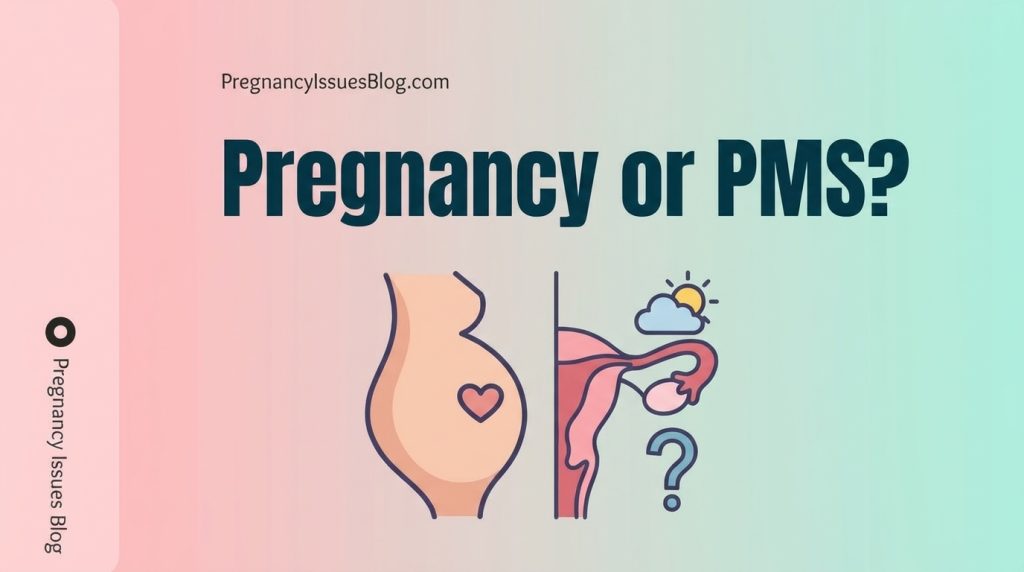
The “Two-Week Wait” is often described as the longest fortnight in existence, especially if you’re trying to conceive.
Every month, millions of people find themselves hyper-analyzing every twinge, mood swing, and cramp, asking the million-dollar question: Is this a baby, or is my period just around the corner?
The reason it’s so hard to tell the difference is biological.
Both Pre-Menstrual Syndrome (PMS) and early pregnancy are driven by the hormone progesterone.
Whether you’ve conceived or not, your body ramps up progesterone after ovulation to prepare the uterine lining.
However, there are subtle “tells” that can help you distinguish between the two.
Here is how to navigate the confusion.
Table of Contents
ToggleThe Comparison Guide: Spotting the Difference
1. Cramping: The “Type” of Pain
-
PMS: These cramps usually feel like a heavy, dull ache in the lower abdomen that radiates to the lower back. They often intensify right before your period starts.
-
Early Pregnancy: Pregnancy-related cramping (often due to implantation) is usually lighter. It feels more like a “tugging,” “tingling,” or “prickling” sensation rather than a sustained, heavy cramp.
2. Spotting: The Color and Duration
-
PMS: If you see brown or pink discharge that gradually turns into a bright red flow within 24 hours, it’s almost certainly your period.
-
Early Pregnancy: Implantation bleeding occurs in about one-third of pregnancies. It is typically very light, pink or brown in color, and does not progress to a heavy flow. It usually lasts only a few hours to two days.
3. Nausea: More Than Just a “Upset Stomach”
-
PMS: While some people feel slightly nauseous during their period due to prostaglandins, it is relatively uncommon as a pre-menstrual symptom.
-
Early Pregnancy: “Morning sickness” (which can happen at any time of day) usually doesn’t start until about week 6, but many women feel a vague “queasiness” or a sudden aversion to specific smells and tastes just days after implantation.
4. Breast Changes: Look for the Areolas
-
PMS: Breasts often feel heavy and sore during the second half of your cycle, but the sensation usually goes away as soon as your period starts.
-
Early Pregnancy: Your breasts may feel tender, but you might also notice the areolas (the area around the nipple) becoming darker or larger. You might also see small, painless bumps (Montgomery’s tubercles) becoming more prominent.
The “Quick Check” Side-by-Side
| Feature | PMS | Early Pregnancy |
| Fatigue | Common, usually ends when period starts. | Intense, “bone-deep” exhaustion. |
| Cravings | Usually salt, sugar, or chocolate. | Specific aversions (e.g., coffee or meat). |
| Mood | Irritability and “crying spells.” | Similar, but often accompanied by a “glow” or anxiety. |
| Urination | Normal frequency. | Increased need to pee (due to higher blood volume). |
| Basal Temp | Drops right before your period. | Stays elevated for 18+ days. |
The Only “Sure” Sign
While symptom-spotting can be a helpful guide, it isn’t definitive.
Your body can mimic pregnancy symptoms due to stress, travel, or even just a particularly strong ovulation.
The only true “dead giveaway” is a missed period combined with a positive hCG test.
If your Basal Body Temperature (BBT) stays elevated for more than 16 days after ovulation, that is the most reliable physiological sign you’ll see before the double lines appear.
The Golden Rule: If you are at least 12 days past ovulation (DPO), a high-sensitivity pregnancy test should give you a reliable answer. Until then, try to keep your stress levels low, stress can actually delay your period, making you think you’re pregnant when you’re just late!