Recently, the term “natural birth” has moved away from its roots as a polarizing buzzword and toward a more nuanced, evidence-based choice.
For many, choosing an unmedicated delivery is about more than just avoiding an epidural; it is about leaning into the body’s physiological design to experience the transition into parenthood with a high degree of awareness and mobility.
However, “natural” does not mean “unprepared.”
Like any high-performance athletic event, a successful unmedicated birth requires a specific toolkit, a supportive team, and a deep understanding of the biological math of labor.
Table of Contents
Toggle1. The “Why”: More Than Just Avoiding Pain
Why choose to feel everything?
For most, the decision is rooted in the “Golden Hour” immediately following birth.
Without the numbing effects of certain medications, many women find they are more mobile immediately after delivery, which can aid in P(Successful Breastfeeding) and a faster physical recovery.
Furthermore, an unmedicated birth allows for the full expression of the “Fetal Ejection Reflex,” where the body’s natural urge to push is uninhibited, often leading to a more efficient second stage of labor.
2. The Hormonal Feedback Loop
Labor is driven by the endocrine system.
The primary driver of contractions is Oxytocin, often called the “love hormone.”
In a natural birth, your body relies on a closed-loop system: as the baby’s head presses against the cervix, the brain releases more Oxytocin, which increases the strength of contractions.
The enemy of this process is Adrenaline.
If you feel fearful or observed, your body enters “Fight or Flight” mode.
Adrenaline can actually inhibit Oxytocin production, causing labor to stall.
The Strategy: Natural birth is about creating an environment where the amygdala feels safe, allowing the Oxytocin to flow unimpeded.
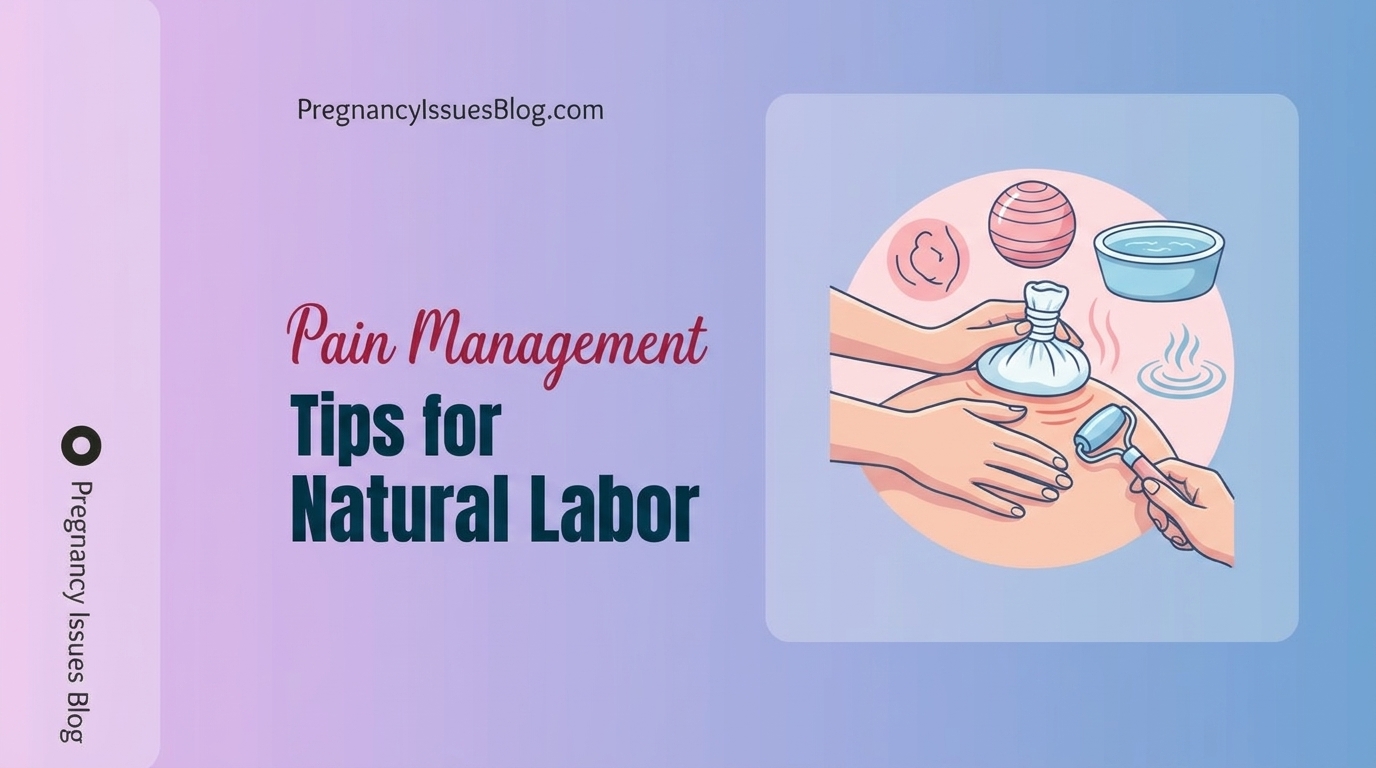
3. The Natural Toolkit
If you aren’t using an epidural, you need other ways to manage the intensity.
-
Hydrotherapy: Often called the “midwife’s epidural,” warm water can lower your blood pressure and provide buoyancy, making it easier to change positions.
-
The Gate Control Theory: This is the science of distraction. By using counter-pressure on the hips or TENS machines, you send “non-pain” signals to the brain that travel faster than “pain” signals, essentially “closing the gate” to some of the intensity.
-
Vocalization: Deep, low-pitched moans help relax the jaw. Because of the physiological connection between the jaw and the pelvic floor, a relaxed mouth often leads to a more relaxed birth canal.
4. Building Your Birth Team
Now, the “Standard of Care” for natural birth heavily involves Doulas.
Research consistently shows that continuous labor support reduces the P(Intervention) and increases patient satisfaction.
Whether you are at a birth center or a hospital, having a team that understands “The Natural Path” is non-negotiable.
You need a coach, not just a monitor.
5. The “Pivot” Plan
The most important thing to know before choosing a natural birth is that flexibility is a strength, not a failure.
Labor is unpredictable.
Sometimes, the baby’s position or the mother’s exhaustion levels mean that a “pivot” to medical intervention is the healthiest choice for everyone involved.
Choosing a natural birth means you are prepared for the work, but you are also wise enough to use the medical tools available if the situation demands them.
Natural Birth vs. Medicated Birth
| Feature | Unmedicated (Natural) | Medicated (Epidural) |
| Mobility | Full freedom to walk, squat, and move. | Usually restricted to bed/seated positions. |
| Sensation | High intensity; “Functional” pain. | Minimal to no sensation from the waist down. |
| Recovery | Often immediate mobility and alertness. | May involve a “numbness” period and IV fluids. |
| Hormones | Natural Oxytocin and Endorphin peak. | Often involves synthetic Pitocin to maintain labor. |
| Pushing | Guided by natural “urge” and gravity. | Often guided by coaching and monitoring. |
Conclusion
Choosing a natural birth is a commitment to the process of labor as much as the outcome.
It requires mental fortitude, physical preparation, and a team that believes in your body’s capability.
By understanding the science behind the hormones and building a robust toolkit of coping mechanisms, you can transform the “unknown” of birth into a powerful, transformative experience.
Are you planning on using specific pain-management tools like a TENS machine or hydrotherapy, or are you still in the process of building your natural toolkit?