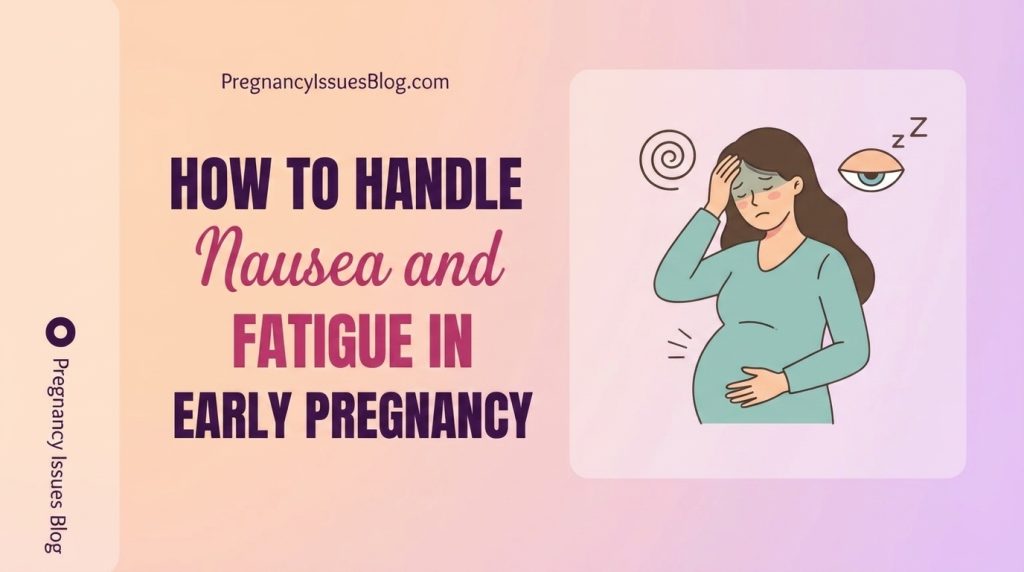
The first trimester of pregnancy is often described as a “beautiful beginning,” but for many of us, it feels more like a 12-week bout of seasickness combined with the exhaustion of someone who just finished an Ironman.
If you’re currently spending more time with your bathroom floor than your friends, or if “napping” has become your primary personality trait, you aren’t alone.
Your body is performing a biological miracle, literally building an entire organ (the placenta) from scratch, so it’s time to stop feeling guilty about your lack of productivity and start focusing on survival.
Table of Contents
ToggleHacking the Nausea: Beyond Saltines
The first thing they don’t tell you is that “morning” sickness is a massive branding error.
It’s often a 24/7 internal rollercoaster.
We’ve moved past just eating crackers nowadays; we’re looking at systemic ways to calm the vagus nerve.
1. The “Beige Diet” is Okay
Now is not the time to be a wellness influencer.
If the thought of a kale smoothie makes you weep, don’t drink it.
The “Beige Diet”, potatoes, plain pasta, bagels, and white rice, is often all the body can handle.
Your baby is remarkably good at taking what they need from your existing stores, so focus on what stays down.
2. Micro-Meals and Blood Sugar
Nausea often peaks when your stomach is empty. Aim for “micro-meals” every 90 minutes.
A single piece of cheese or a handful of almonds can prevent the blood sugar crash that triggers the urge to gag.
3. The B6 + Unisom Protocol
This remains the gold standard for clinical nausea management. Taking Vitamin B6 (Pyridoxine) alongside a low-dose doxylamine (found in Unisom) at night can significantly dampen the nausea the following day.
Surviving the Fatigue: You Are an Organ Factory
The fatigue of early pregnancy is “bone-deep.”
It’s not just “I didn’t sleep well” tired; it’s “I need a nap after taking a shower” tired.
This happens because your blood volume is increasing by nearly 50%, and your heart rate is rising to accommodate the new life.
1. The 20-Minute “Placenta Nap”
In our fast-paced world, we try to power through.
Don’t.
If you can, implement a 20-minute power nap between 1:00 PM and 3:00 PM.
Anything longer might disrupt your night sleep, but a short “reset” can give your heart the break it needs.
2. Check Your Iron and Vitamin D
While some fatigue is standard, extreme lethargy can be linked to anemia.
As your body produces more blood, your iron stores can be depleted rapidly.
Ensure your prenatal includes an easy-to-digest iron bisglycinate to keep your energy levels from bottoming out.
3. Hydration or Bust
Dehydration is a leading cause of both nausea and fatigue. If plain water tastes “metallic” (a common early pregnancy quirk), try:
-
Ice-cold sparkling water with lemon.
-
Electrolyte-infused popsicles.
-
Watermelon or cucumber slices.
When It’s More Than Just “Normal”
There is a line between “standard” morning sickness and Hyperemesis Gravidarum (HG).
If you cannot keep any liquids down for 24 hours, if you are losing weight, or if you feel faint, call your doctor immediately.
Now, we have excellent IV hydration therapies and anti-emetic medications that are safe and effective.
You don’t have to suffer in silence to be a “good” mom.
Conclusion
The first trimester is a season of endurance.
It won’t last forever, even if it feels like it today.
Usually, around week 13, the placenta takes over the hormonal heavy lifting, and the “fog” begins to lift.
Until then, be kind to yourself, eat the bagel, and take the nap.
Have you noticed your nausea is triggered by specific smells or times of day, or does it feel like a constant companion regardless of what you do?