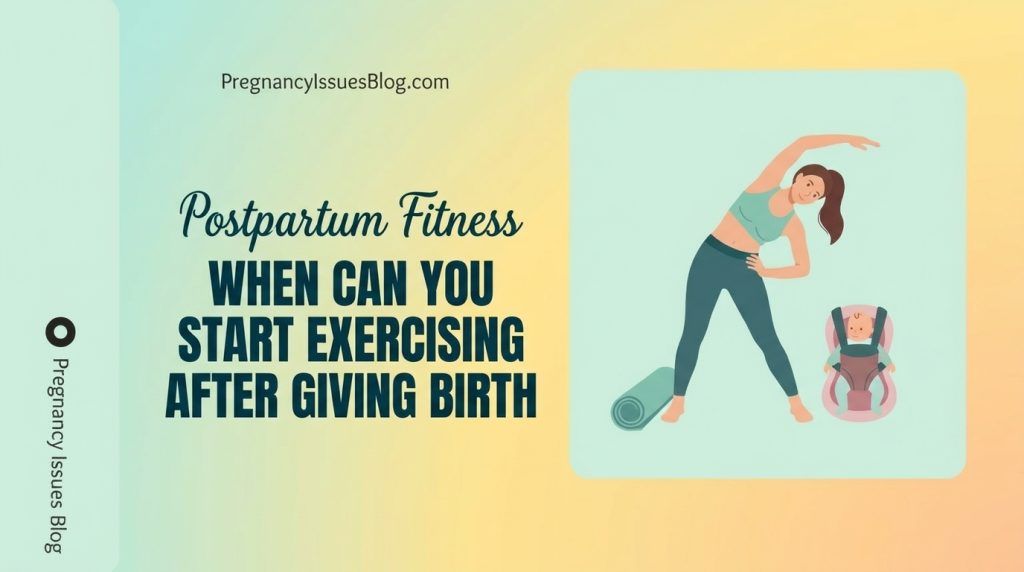
The 6-week “all-clear” from your doctor is often treated like a magical starter pistol for a race back to your pre-baby fitness.
But now, we’ve finally realized that the body doesn’t operate on a calendar, it operates on a healing curve.
Returning to exercise isn’t just about “getting your body back.”
It’s about restoring a system that has been structurally and hormonally altered for the better part of a year.
Here is the evidence-based roadmap for when (and how) to get moving again safely.
Table of Contents
Toggle1. Phase One (Week 0–2): The Internal Rehab
In the first fourteen days, your “workout” happens internally.
Your body is managing a massive fluid shift and the shrinking of your uterus.
The focus here is Diaphragmatic Breathing.
This isn’t just “breathing”, it’s a way to gently reconnect your brain to your pelvic floor and transverse abdominis.
By focusing on the expansion of your ribs and the soft release of the pelvic floor, you are managing intra-abdominal pressure (IAP).
If you push too hard before the “Resistance” is healed, you increase the risk of prolapse.
Keep it to slow walks around the house and lots of horizontal rest.
2. Phase Two (Week 2–6): Functional Mobility
Once the initial “fog” lifts and your bleeding (lochia) has slowed down, you can begin functional movement.
-
Walking: Start with 5-10 minutes on flat ground. If you feel increased pressure or bleeding afterward, you went too far.
-
Pelvic Tilts: These help “wake up” the core without the strain of a crunch.
-
Glute Bridges: Your glutes took a vacation during pregnancy as your center of gravity shifted. Rebuilding them is key to taking the load off your lower back.
The Wit Check: If you can’t walk to the mailbox without feeling like your insides are going to exit via the basement, you aren’t ready for a Peloton class. Respect the plumbing!
3. Phase Three (Week 6–12): The Transition
This is typically when you get the medical “okay” to resume exercise.
However, we now view this as the time to start Training to Train.
-
Check for Diastasis Recti: Before doing planks or crunches, check the gap between your abdominal muscles. If there is a significant separation, traditional “ab work” can actually make the “mom pooch” worse by pushing your organs against the weakened midline.
-
Strength Training: Start with bodyweight movements. Squats, lunges, and rows are excellent for rebuilding the strength you need to carry a growing baby and a heavy car seat.
-
High Impact (Wait!): Running and jumping are usually discouraged until at least 12 weeks postpartum. Your ligaments are still soft due to the hormone Relaxin, which can stay in your system for months, especially if you are breastfeeding.
4. The Stop Signs (Red Flags)
If you experience any of the following during or after exercise, your body is telling you to de-escalate:
-
Incontinence: Leaking urine or stool.
-
Heaviness: A feeling of pressure or “bulging” in the vaginal area.
-
Pain: Sharp pain in the pelvic girdle, back, or at an incision site.
-
Bleeding: If lochia returns or turns bright red after it had already faded.
Your Postpartum Roadmap
| Timeline | Primary Focus | Recommended Activity |
| Week 0–2 | Breath & Connection | Diaphragmatic breathing; Kegels; Rest. |
| Week 2–6 | Basic Mobility | Short walks; Glute bridges; Pelvic tilts. |
| Week 6–12 | Strength Building | Bodyweight squats; Resistance bands; Long walks. |
| Week 12+ | Impact & Intensity | Jogging; Jumping; Heavy lifting (gradual). |
Conclusion
The goal of postpartum exercise isn’t to “shred” or “blast fat.”
It’s to rebuild the foundation of a house that just survived a major earthquake.
Take your time.
The gym will still be there in three months, but you only get one chance to heal correctly after birth.
Trust your gut, literally and figuratively.