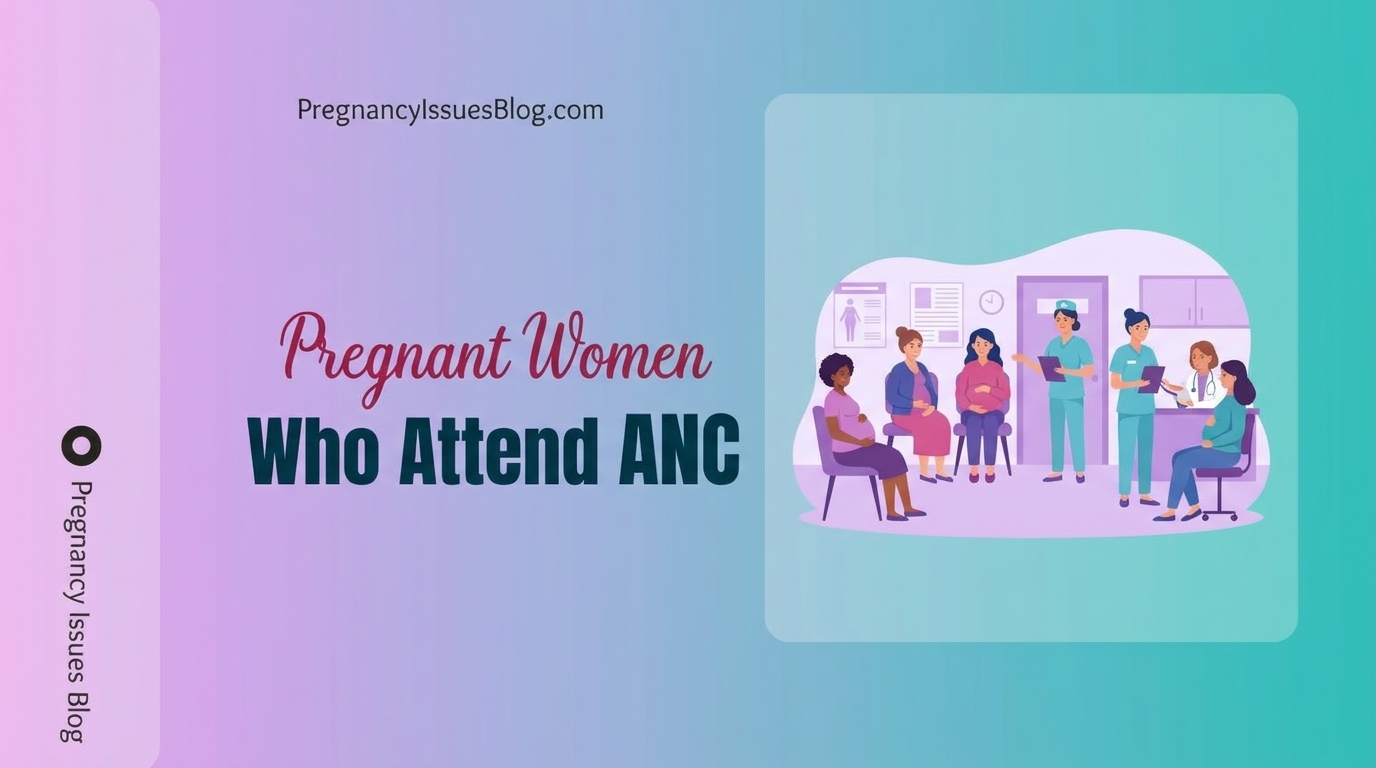
For many pregnant women, a visit to a public hospital for Antenatal Care (ANC) follows a predictable script: hours of waiting, a brief blood pressure check, a quick ultrasound, and a two-minute “nutrition talk” that feels more like a lecture than a consultation.
The advice is usually generic: “Eat more vegetables, avoid sugar, and take your vitamins.”
While technically correct, this approach is failing.
Now, with rising food costs and complex social pressures, we need to stop treating nutrition as a footnote and start treating it as the foundation of maternal health.
Table of Contents
ToggleWhy Antenatal Nutrition Counselling in Public Hospitals Needs to Be Completely Rethought
If you’ve ever sat on a hard wooden bench in a public clinic, you know the vibe.
The walls are covered in faded posters of “The Food Pyramid,” and the air is thick with the nervous energy of a hundred women.
When you finally see a provider, the nutrition advice you receive is often a hurried “prescription” to eat better.
But nutrition isn’t a pill you swallow once a day.
It is a complex behavior influenced by your environment, your culture, and your wallet.
If we want to improve birth weights and reduce maternal anaemia, we have to rethink the entire conversation.
1. The “Prescription” Problem
In public hospitals, nutrition is often treated as a medical directive.
“Eat 60 grams of protein.”
“Increase your iron.”
To a mother who is already overwhelmed, these numbers mean very little.
We need to move away from the Information-Only Model.
Simply giving a woman a list of foods isn’t enough.
We need to discuss Implementation.
Counseling should focus on “how”: How do you cook these beans without getting bloated?
How do you sneak spinach into a meal when you have three other kids to feed?
2. The Economic Blind Spot
The biggest barrier to following hospital advice is often the price tag.
When a provider suggests “fresh salads and lean meats” without asking about the woman’s budget, the advice is effectively discarded.
It feels like it’s for “other people”, people with more money.
Public hospital counseling must become Resource-Aware.
Instead of recommending expensive imported fruits, we should be highlighting the nutritional power of local, seasonal, and frozen staples.
Counseling should include “Budget Hacks” (like using organ meats for iron or sardines for DHA) that acknowledge the economic reality of the recent cost-of-living crisis.
3. The Cultural Disconnect
Many nutrition charts used in public health systems are decades old and Western-centric.
If a woman doesn’t see her traditional staples like fufu, jollof, tortillas, or plantains on the “healthy list,” she may assume her cultural diet is inherently bad.
A rethink means Culturally Competent Counseling.
We need to stop telling women to change their entire culinary heritage and start showing them how to optimize it.
How can we balance a traditional grain-heavy meal with more fiber?
How can we prepare local vegetables to preserve their nutrients?
4. Moving from “Don’t” to “Do”
Most hospital nutrition talks are a list of “No’s”: No caffeine, no soft cheese, no raw eggs, no sugar.
While safety is important, this fear-based approach creates “Nutritional Paranoia.”
Instead of a list of restrictions, we need a list of Empowerment.
Counseling should focus on the “Building Blocks.”
Tell the mother what her baby’s brain is doing this week and which food “powers” that growth.
When nutrition is framed as a gift to the baby rather than a rule for the mother, the motivation to change behavior skyrockets.
The Roadmap: From Lecture to Conversation
How do we actually fix this?
It starts by changing the format:
-
Group Counseling: Instead of 2 minutes alone, give women 30 minutes in a group where they can share tips and recipes.
-
Visual Aids: Use real food or life-sized photos, not just text-heavy pamphlets.
-
Peer Educators: Use “Veteran Moms” from the community who have successfully navigated pregnancy on a budget to lead the talks.
Conclusion
Rethinking nutrition counseling in public hospitals isn’t just about changing what we say; it’s about changing how we listen.
When we provide advice that is empathetic, practical, and culturally rooted, we don’t just fill a stomach, we build a foundation for a healthier generation.