We often hear about the “pregnancy glow,” but behind that radiant skin, your body is performing a high-stakes biological miracle: building a human brain from scratch.
While prenatal vitamins cover the basics, there is one nutrient that acts as the literal “scaffolding” for your baby’s intellect: Omega-3 fatty acids.
When Omega-3s (specifically DHA) are missing from the construction site, the brain’s “blueprints” don’t change, but the structural integrity might.
Here is a look at the science of what happens when the supply doesn’t meet the demand.
Table of Contents
ToggleWhat Happens to Your Baby’s Brain When You Don’t Eat Enough Omega-3 During Pregnancy
If you were to peek inside your baby’s developing head, you wouldn’t see a solid mass; you’d see a complex, lightning-fast electrical storm.
The insulation for all those “wires” (neurons) and the structure of the cells themselves are made of fat.
In fact, the human brain is nearly 60% fat.
Among those fats, Docosahexaenoic acid (DHA), a type of Omega-3, is the undisputed king.
During the third trimester, your baby’s brain undergoes a massive growth spurt, and it “borrows” DHA from your own stores at an incredible rate.
But what happens if the bank account is empty?
1. Building with “Low-Quality” Materials
Think of Omega-3s as high-grade steel.
If a builder runs out of steel, they might use wood or scrap metal to finish the job.
The building will still stand, but it won’t be as resilient.
When a mother’s diet is low in Omega-3, the baby’s brain is forced to use other types of fats, like Omega-6s or saturated fats, to build cell membranes.
These “substitute” fats aren’t as fluid.
This lack of fluidity makes it harder for brain cells to communicate with one another, potentially slowing down how quickly your child can process information later in life.
2. The “Processing Speed” and IQ Connection
Multiple longitudinal studies have tracked children from the womb into their school years.
The findings are often consistent: mothers with higher DHA intake tend to have children with higher cognitive scores.
When Omega-3 levels are low, the baby may struggle with:
-
Executive Function: The ability to plan, focus, and multitask.
-
Hand-Eye Coordination: Early motor skills that rely on rapid brain-to-muscle signaling.
-
Vocabulary Growth: The speed at which a toddler acquires and understands new words.
3. Focus and Behavioral Risks
There is a growing body of research linking low prenatal Omega-3 levels to an increased risk of behavioral issues, such as ADHD and anxiety, in early childhood.
Because Omega-3s help regulate neurotransmitters (like dopamine and serotonin), a deficiency can leave the brain’s “emotional thermostat” slightly out of alignment.
It’s not just about the baby, either.
If your baby is pulling all the remaining Omega-3s from your brain to fuel their growth, it can leave you at a higher risk for postpartum depression.
It’s a biological “tax” that both mother and child pay.
4. The Visual Link (The Eyes are an Extension of the Brain)
We often forget that the retina (the back of the eye) is actually part of the central nervous system.
DHA is found in extremely high concentrations in the eyes.
A lack of Omega-3 during pregnancy can lead to poorer visual acuity in infancy.
Essentially, the “camera” isn’t as sharp because the “film” (the retina) didn’t have the right nutrients to develop fully.
How to Safely Increase Your Intake
The irony is that many pregnant women avoid the best source of Omega-3, fish, because they fear mercury.
However, you can bridge the gap safely:
| Source Type | Best Examples | Why it Works |
| Low-Mercury Fish | Salmon, Sardines, Trout. | High in “pre-formed” DHA that the body uses instantly. |
| Algal Oil | Seaweed-based supplements. | The vegan “gold standard”; this is where the fish get their DHA from! |
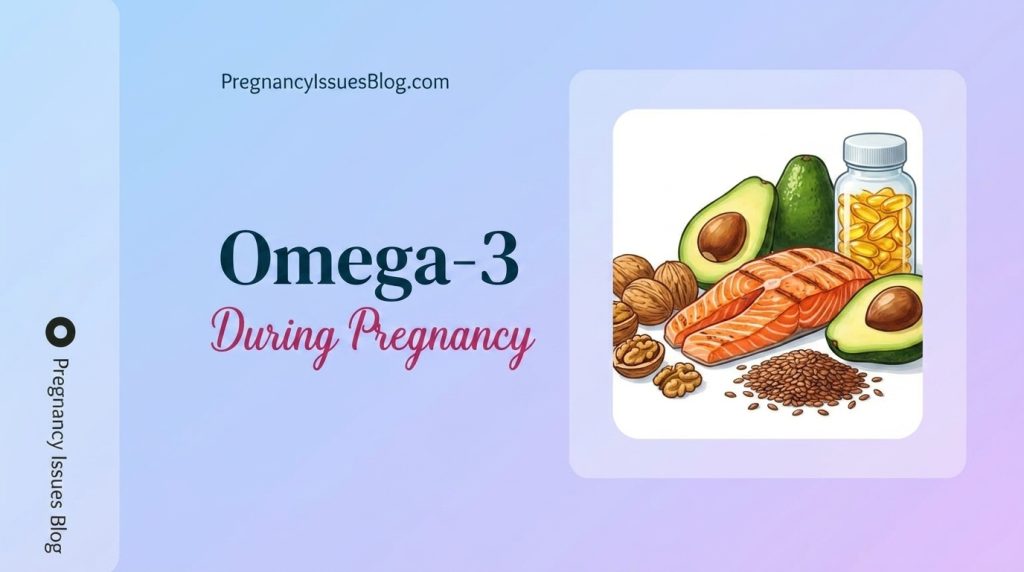
| Seeds/Nuts | Chia, Flax, Walnuts. | Contains ALA, which the body can convert to DHA (though the conversion rate is low). |
Conclusion
Your baby is a master at taking what they need from you, but they can’t take what isn’t there.
Ensuring you have a steady supply of Omega-3s isn’t about creating a “genius” overnight; it’s about giving your baby the highest-quality structural materials possible for the most important organ they will ever own.